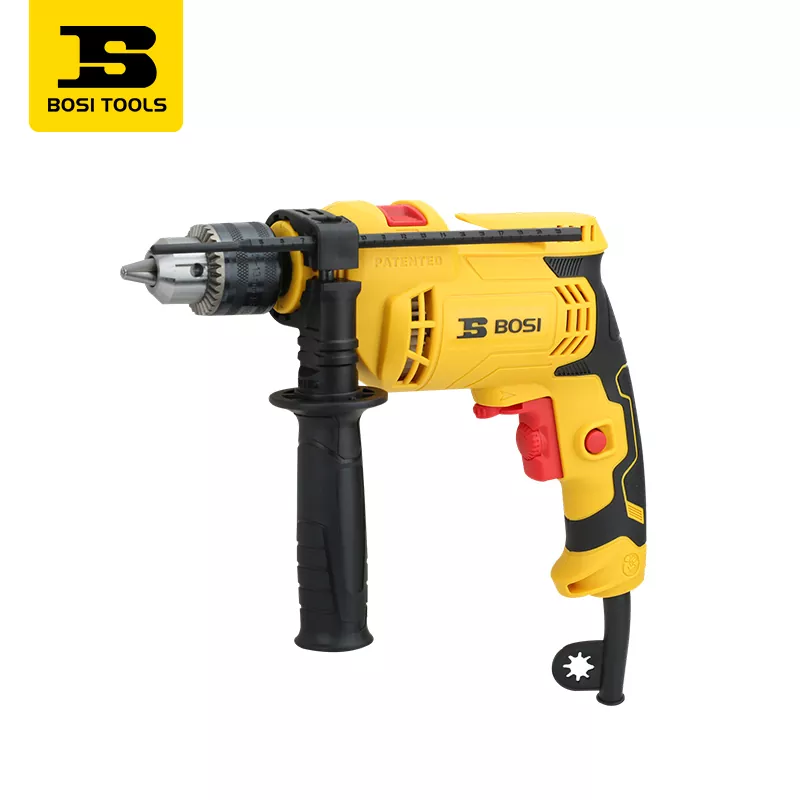
By BOSI Tools
Choose cordless power tools by matching the tool type and working capacity to the job, then checking the battery platform, handling, and charging setup. Voltage, torque, and amp-hours help narrow the choice. A useful comparison also identifies the material, accessory, battery, and workload behind those numbers.
A drill that handles occasional assembly may be awkward for repeated overhead work. An impact wrench with a larger maximum torque may need a different socket drive. An extra battery may postpone a charging delay without solving it. The right purchase is a complete configuration that can do the required work at an acceptable pace and finish.
In this guide
Essential factors to evaluate cordless power tools
Write down the task before comparing models: what material, what hole or fastener size, how much working space, and how often the tool will run. Add the required result. A clean hole, a screw seated without damage, and a joint tightened to a specified procedure are different acceptance requirements.
| Work requirement | Tool to consider | Check first |
|---|---|---|
| Cabinet and furniture assembly | Drill driver or suitable screwdriver | Clutch control, bit engagement, installed weight, access |
| Holes in wood or metal | Drill driver with the correct bit | Material-specific drilling capacity, chuck fit, speed range |
| Repeated driving of suitable screws | Impact driver or drill driver, depending on the fastener and finish | Bit interface, control, fastening requirement, duty cycle |
| Mechanical bolt work | Impact wrench with suitable impact-rated sockets | Drive size, declared torque type, access, final tightening procedure |
| Pipe cutting and dismantling | Reciprocating saw | Blade material and length, work support, stroke, clearance |
| Masonry or concrete drilling | Suitable hammer drill or rotary hammer | Material, hole diameter and depth, operating mode, bit system |
Define the workload and the working space
Count useful operations rather than simply calling the application light or heavy. Note whether the work is intermittent or repeated, whether the tool is used above shoulder height, and whether charging power is available nearby. For a crew, record how many tools run at once.
For factory selection, I begin with those details. If a tool struggles, I recommend checking the accessory, gear, clutch setting, and battery condition before specifying a larger tool. A worn bit or unsuitable speed can make a capable drill look inadequate.
When comparing samples, I would keep the material, accessory, and starting battery condition consistent, then record acceptable output and interruptions. Where a joint has a prescribed tightening requirement, I would check that requirement separately. A numbered clutch ring does not replace a calibrated torque measurement.
What makes a good cordless drill for your work?
For occasional household assembly, control, comfortable handling, and a complete battery-and-charger package can matter more than the largest maximum torque. Repeated drilling adds other questions: can the drill maintain useful output with the specified bit, and can the charging setup support the workload?
Keep these jobs separate from concrete drilling. BOSI's brushless screwdriver drill is described as a non-hammer drill. Choosing its higher-voltage version does not add hammer action.
Choose a cordless tool system and battery platform
What is a battery platform?
A battery platform is a defined system of compatible tools, battery packs, and chargers. Its value is the ability to share approved packs across suitable tools and add equipment without starting a separate charging setup for every purchase.
The best battery tool system for a buyer depends on the tools needed now and later, the available pack sizes, handling, charging capacity, and replacement availability. A large tool catalogue is useful only if it includes the tools and configurations your work requires.
Check compatibility by exact model
Matching brand names and voltage labels do not establish compatibility. Check the tool and pack model numbers against the manufacturer's compatibility information. Confirm the charger separately; a battery fitting a tool does not prove that any charger from the same brand is suitable.
| Connection | Information to match | Buying implication |
|---|---|---|
| Tool and battery | Approved model pairing, operating voltage, interface, any pack restrictions | Specify the actual pack supplied with the tool |
| Battery and charger | Supported pack models, charging specification, operating conditions | Confirm charging time for that pack, not a different capacity |
| Charger and worksite | Input voltage and frequency, plug, available outlets, usable charging slots | Include the correct charger configuration in the order |
CCOHS guidance on electric tools calls for the manufacturer-specified battery and a charger intended for that battery. Use that pairing as the starting point for platform selection.
Check the next purchase as well as the first
List likely additions such as a saw, wrench, work light, or second drill. Ask whether each tool belongs to the same approved system, whether spare packs can be obtained, and whether accessories and service parts are available. For distributor orders, put these details in the configuration sheet rather than relying on a family name or product photograph.
Understand voltage before comparing tools
Voltage is an electrical rating, not a complete performance score. Compare what the label means, then examine the motor, gearing, battery configuration, working capacity, and handling of the actual tool.
Nominal voltage and maximum-voltage labels
Nominal voltage describes a battery's designated operating voltage. A maximum-voltage label refers to a different voltage condition. Before treating two labels as separate performance classes, check which convention the manufacturer uses. A voltage relationship established for one platform does not establish compatibility with another.
This distinction also matters when calculating energy. Use the pack's stated nominal voltage and capacity, or its printed watt-hour rating. Do not multiply an unexplained maximum-voltage label by Ah and present the answer as verified rated energy.
What BOSI's drill specifications actually show
The BOSI drill page lists a 16V version with 50 N·m maximum torque and a 20V version with 60 N·m. Both list the same two speed ranges. That is a configuration comparison: the maximum torque changes while the listed no-load speeds remain unchanged. It does not establish that voltage alone caused the difference or that every 20V drill outperforms every 16V drill.
I would use the ratings to shortlist a configuration, then compare it on the intended material. For an overhead assembly job, I would also check the installed battery's effect on balance before choosing the higher-rated version.
Compare torque, speed, motor type, and accessory fit
Different tool types need different comparisons. Drill torque, impact-wrench torque, reciprocating stroke, and chuck size describe different properties. Avoid using one large number to rank an entire cordless tool system.

Brushless screwdriver drillCompare torque, gears, clutch control, and chuck fit for the actual work.
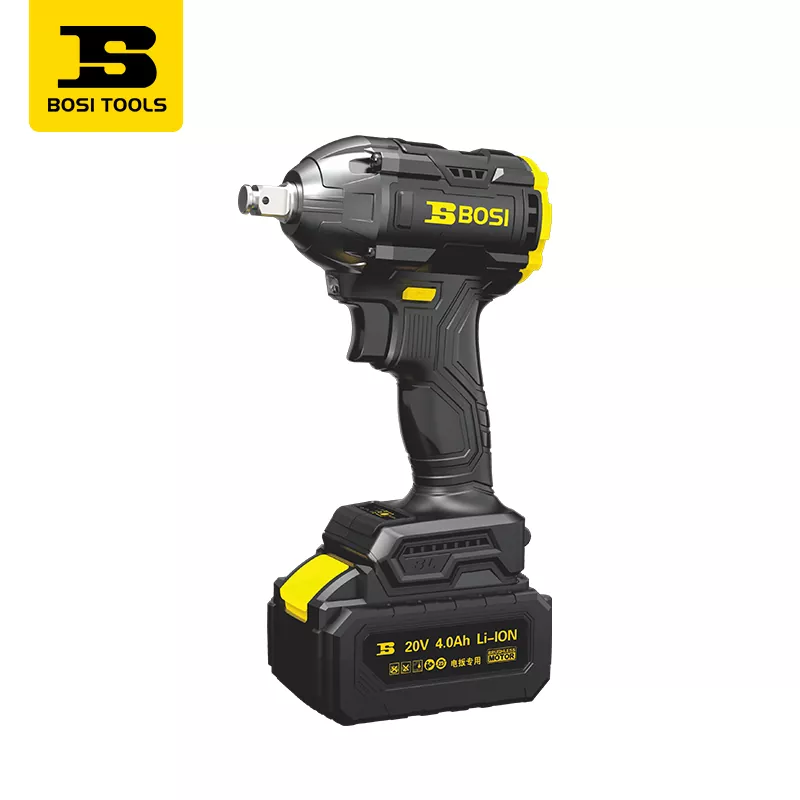
Brushless wrenchMatch the drive and supplied battery configuration as well as the declared torque.
Drill drivers: compare the complete specification
| Specification | 16V version | 20V version | What it helps you check |
|---|---|---|---|
| Battery capacity | 2.0Ah | 2.0Ah | Listed capacity; not proof of equal energy or runtime |
| Maximum torque | 50 N·m | 60 N·m | Declared maximum; compare test definitions before ranking other models |
| No-load speed | 0-500 / 0-1800 r/min | 0-500 / 0-1800 r/min | Available speed ranges without a working load |
| Maximum clamping diameter | 10mm | 10mm | Shank fit in the chuck, not a universal hole-diameter limit |
| Torque settings | 23+1 | 23+1 | Clutch selection and drilling mode, not 23 calibrated torque values |
| Motor | Brushless | Brushless | Motor construction; assess the whole tool in use |
Source: BOSI brushless screwdriver drill specifications. These are manufacturer-published specifications for the listed configurations.
A low mechanical gear provides a different speed-and-torque relationship from a high gear. The trigger then controls speed within the selected range. Choose a suitable gear and accessory for the material; no-load RPM alone does not tell you how quickly a hole will be completed under load.
The numbered clutch settings help limit screwdriving output through the clutch mechanism. They are not a sequence of torque values in N·m, and the same number on different drills need not represent the same threshold. Start with a suitable low setting on a representative workpiece and check the result before continuing.
Chuck capacity needs similar care. A 10mm chuck accepts suitable shanks within its clamping range. A reduced-shank bit can have a cutting diameter larger than its shank, so fit alone does not establish that the drill can use it for the intended hole. Check the manufacturer's drilling capacity and accessory instructions.
Impact wrenches: drive size and torque definition
| Declared maximum torque | Listed battery | Square drive |
|---|---|---|
| 350 N·m | 4.0Ah | 1/2 inch |
| 550 N·m | 4.0Ah | 1/2 inch |
| 850 N·m | 6.0Ah | 1/2 inch |
| 1200 N·m | 6.0Ah | 3/4 inch |
The BOSI brushless wrench parameter table shows why a configuration must stay together: battery capacity and drive size change across the range. Do not compare the highest torque from one row with the battery or drive from another.
For comparisons between models, ask whether a torque value describes tightening, loosening, or another test condition, and which battery was used. A maximum impact rating does not tell you the final torque of an installed joint. Follow the joint's specified assembly and verification procedure, using appropriate measuring equipment where required.
Reciprocating saws: stroke and blade selection
A reciprocating saw's stroke describes blade travel. It does not establish cutting capacity or cutting time on its own. Blade length, tooth pattern, material, work support, and the available clearance all affect suitability. Longer stroke is not a substitute for the right blade.
The BOSI brushless reciprocating saw lists a 20V/4.0Ah configuration, a 20mm stroke, and tool-free blade replacement. Those details help compare the supplied setup and blade-changing arrangement. Check a representative pipe or timber section to establish useful output for your job.
Brushless versus brushed motors
A brushed motor uses brushes and a commutator; a brushless motor uses electronic commutation. Removing the brush contact removes that wear item. It does not remove maintenance needs elsewhere in the tool, such as the chuck, gearbox, vents, or blade clamp.
For repeated use, compare the whole tool's loaded performance, temperature-related interruptions, handling, and service requirements. A brushless label alone cannot establish a universal percentage improvement in runtime or output. For occasional assembly, good control and a suitable kit may influence the purchase more than the motor label.
Understand battery capacity: amps, amp-hours, and watt-hours
Amps describe current, amp-hours describe charge capacity, and watt-hours describe energy. These units answer different questions. A capacity number should not be read as the tool's current draw or as a promised operating time.
What does 1.5Ah mean on a battery?
A 1.5Ah rating expresses charge capacity under the rating conditions. In simple arithmetic, 1.5 amperes for one hour equals 1.5 amp-hours. That is a unit relationship, not a promise that a particular tool will run for an hour: current varies with the tool and load, while available capacity depends on operating conditions and battery limits.
What does 5Ah mean on a battery?
A 5Ah rating expresses more charge capacity than 1.5Ah under comparable rating conditions. It does not mean a pack must contain five cells, deliver only five amps, or power every tool for five hours. Voltage and the intended load are still needed to interpret the number.
Within a compatible platform, a larger-capacity pack can be useful for sustained work, but compare the actual pack dimensions, weight, output specification, and charging time. Capacity alone does not tell you the internal cell arrangement or the power available to the tool.
Amps versus amp-hours
The question "How many amps does a typical power tool use?" needs a specific tool and operating condition. Battery current changes with load. A corded tool's input-current rating and a charger's mains input are different measurements again. Use their respective nameplates and instructions; a 5Ah battery label does not supply the answer.
Use watt-hours when comparing rated energy
Where nominal voltage and Ah capacity are known, rated energy can be calculated as:
Rated energy (Wh) = nominal voltage (V) × capacity (Ah)
For an illustrative comparison, assume nominal ratings of 18V/2Ah, 18V/5Ah, and 12V/5Ah. Their calculated energies are 36Wh, 90Wh, and 60Wh. The two 5Ah packs have different energy because their nominal voltages differ. These assumed examples do not describe BOSI pack ratings or establish interchangeability.
| Assumed nominal rating | Calculated energy |
|---|---|
| 18V × 2Ah |
36Wh
|
| 18V × 5Ah |
90Wh
|
| 12V × 5Ah |
60Wh
|
Assumed nominal values for explanation only. Equal Ah at different nominal voltages does not mean equal energy. This is not a runtime test or a BOSI pack rating.
Runtime also depends on usable energy and average power demand. A pack used for intermittent screwdriving and the same pack used for sustained sawing face different loads. For a buying decision, compare acceptable work per charge under a defined task.
Estimate runtime and plan battery rotation
A cordless tool system needs enough charged capacity and enough charging throughput. Extra packs provide a buffer. If the charger replenishes energy more slowly than the work consumes it, that buffer eventually runs out.
Measure a useful unit of work
For drilling, record acceptable holes of a specified diameter and depth in a named material. For screwdriving, record the fastener, pilot-hole arrangement, and required seating condition. For cutting, record the section, blade, and acceptable cut. Also record working time, pauses, and charge time.
When the material or accessory changes, check the estimate again. A runtime figure from small screws is not a capacity figure for repeated pipe cuts. A pack's state of charge, condition, and temperature also need to be comparable.
A charging example: why more batteries may only delay a stop
Assume one operator uses one pack for 30 minutes of continuous work, and an approved charger takes 60 minutes to replenish it. Start with every pack charged. Each charger handles one pack at a time. Ignore cooling delays and changeover time for this simplified scheduling example.
- With two packs and one charger, work can continue for 60 minutes. The first pack is not ready until minute 90, leaving a 30-minute wait.
- With three packs and one charger, the first recharged pack extends work to minute 120. The second pack is not ready until minute 150, so a wait still occurs.
- With three packs and two chargers, the assumed work and recharge intervals can be balanced. One pack works while the others recharge in sequence.
| Setup | 0-30 | 30-60 | 60-90 | 90-120 | 120-150 | 150-180 |
|---|---|---|---|---|---|---|
| 2 packs / 1 charger | Work | Work | Wait | Work | Wait | Work |
| 3 packs / 1 charger | Work | Work | Work | Work | Wait | Work |
| 3 packs / 2 chargers | Work | Work | Work | Work | Work | Work |
Assume 30 min work per pack, 60 min recharge, one operator, and all packs charged at the start. Each charger handles one pack. Cooling and changeover time are excluded. Scheduling example, not BOSI test data.
The practical question I would ask is when a depleted pack becomes ready for reuse, including any required cooling and charging delay. A nominal "two-battery kit" is not an all-day runtime specification.
Allow for several operators
Count simultaneous demand. Two workers sharing a pack pool may consume charged packs faster than one worker, even if each tool is used intermittently. Check whether a multi-bay charger charges several packs simultaneously or sequentially, and confirm that the charging location can support the equipment.
Plan from the actual pack-and-charger pairing. Do not infer the charging time of a 6.0Ah pack from a published time for a smaller pack, or improvise cooling or charger substitutions to force a schedule to work.
Check handling, accessories, and working conditions
Handle the tool with the intended battery installed
A bare-tool weight leaves out part of the configuration you hold. Fit the proposed battery and check balance, grip, trigger reach, and clearance. For overhead work, repeat the actual working posture safely; for confined access, check the tool with the required bit, socket, or blade fitted.
A larger pack can change the tool's envelope as well as its weight. Check whether it contacts the workpiece or prevents access. For repeated work, consider work support and repositioning time alongside the tool's motor capability.
Choose the accessory for the material
The accessory is part of the working system. A drill needs a bit appropriate for the material and within the tool's capacity. An impact wrench needs suitable sockets of the correct drive size. A reciprocating saw needs an appropriate blade, secure work support, and room for the blade's movement.
CCOHS drill guidance recommends matching attachments to the drill and task, securing them correctly, and clamping small workpieces against rotation. A chuck that accepts a bit does not settle those other checks.
Before changing accessories, isolate the tool as its instructions require. Inspect the battery and tool, keep ventilation openings clear, and follow the specified charging and storage conditions. Stop using damaged equipment rather than compensating with a different operating technique.
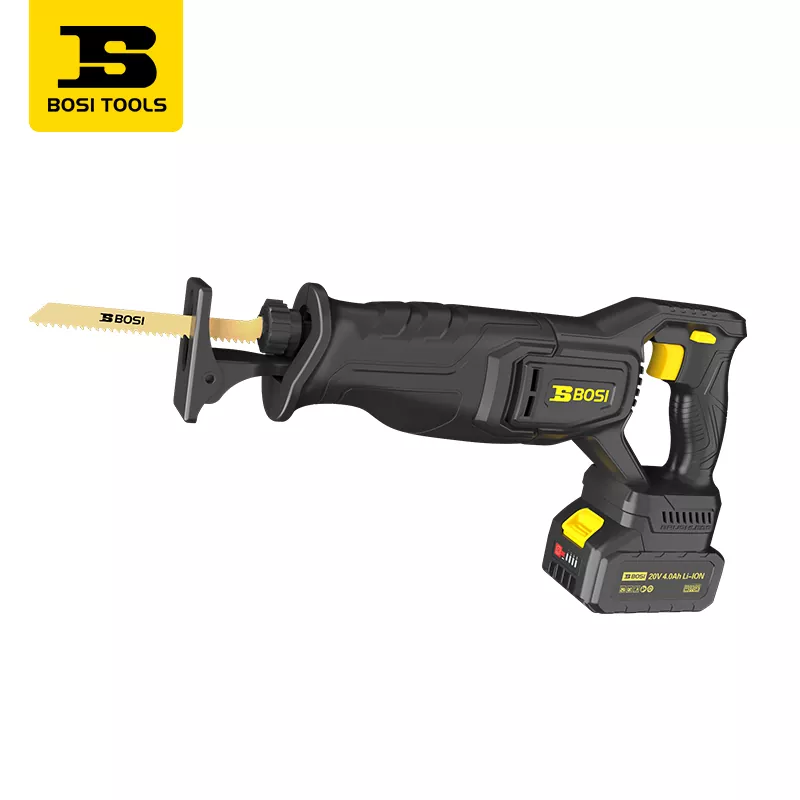
BOSI reciprocating saw. Include the blade, battery, and access requirements when evaluating the working configuration.
Ask for documentation relevant to the tool
Safety documents should match the tool type and configuration. For example, IEC 62841-2-1 covers particular safety requirements for hand-held drills and impact drills; its published scope excludes rotary hammers. That distinction matters when reviewing a product family's documents. A standard number is not a substitute for a matching report, nor does a safety-standard reference establish drilling speed or runtime.
Choose between a bare tool, drill set, and combo kit
A bare tool can suit an existing platform owner who already has approved packs and charging capacity. A complete cordless drill set can suit a first purchase. A combo kit makes sense when its tools will actually be used and the supplied batteries support the intended workload.
Check what is included
| Order detail | Confirm before comparing price |
|---|---|
| Tool identity | Exact model, operating modes, chuck or drive, relevant capacities |
| Battery supply | Model, capacity, quantity, compatibility, condition of supplied packs |
| Charger | Model, input specification, supported packs, simultaneous charging slots |
| Working accessories | Useful bits, blades, or sockets for the task; identify items bought separately |
| Support and replacement | Pack and accessory availability, service arrangements, applicable written terms |
Accessory count is a poor substitute for that check. A large set of bits does not help if the required size is missing or the material specification is wrong. A case is useful for transport, but it does not compensate for too few charged packs.
Compare total configuration cost
Include the batteries, charger, necessary accessories, and any additional charging equipment. When expanding a system, account for whether existing packs can support another operator. A low bare-tool price may be a sensible purchase or an incomplete budget, depending on what you already own.
For distributor or project orders, request a written configuration list per SKU. Keep tool models, pack capacities, charger variants, and package contents attached to that list. A product-family description or an image showing two batteries should not define every order in the range.
Evaluate a cordless tool sample before a larger order
A useful sample evaluation answers whether a specified configuration meets a defined task. Agree on the acceptance criteria before comparing output, and keep the conditions consistent enough to interpret the result.
Separate the measurements
Speed under load, work per charge, recharge time, and handling are separate observations. A drill can perform well on one and less well on another. Recording them separately helps explain the trade-off.
In its published drill testing methods, Consumer Reports describes dynamometer measurements of speed and torque, stop-and-go battery testing, recharge timing, and handling evaluation. The useful lesson for a purchasing comparison is to define each measurement rather than combine everything into a single maximum specification.
For a drilling sample, I would specify the material and thickness, bit type and diameter, hole depth, battery model, starting condition, and acceptable finish. I would record unsuccessful holes and interruptions as well as completed work. One quick demonstration can help shortlist a tool; repeatable results are more useful for choosing a larger order.

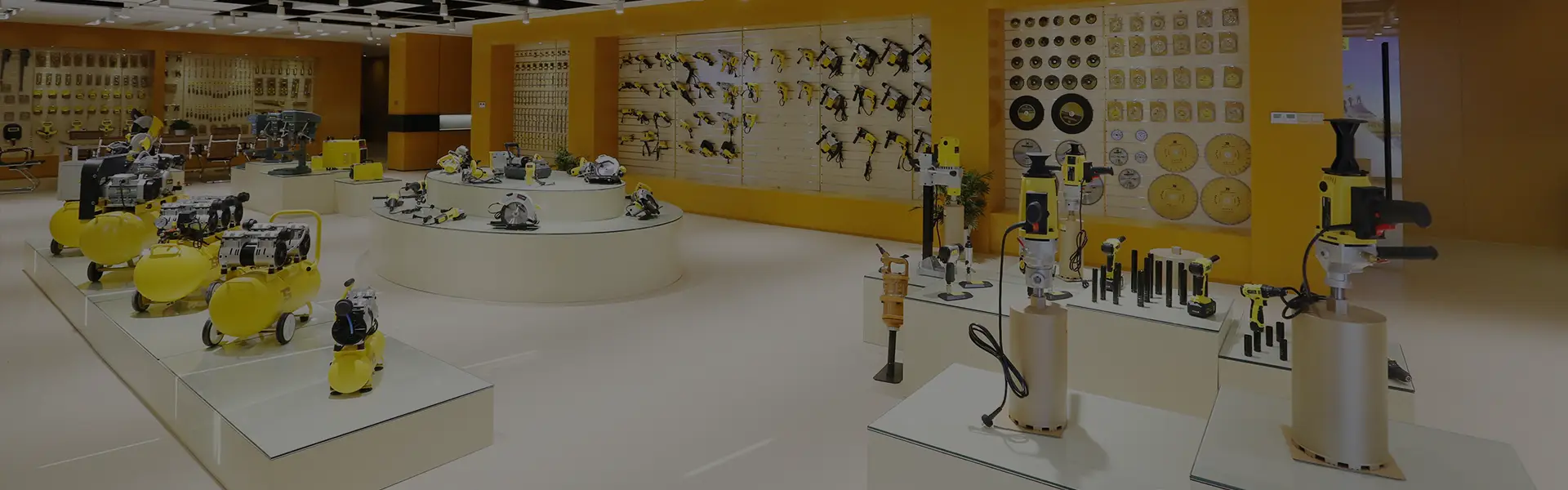
BOSI's product test center, shown in its company imagery. Request test records tied to the tool, battery, and conditions relevant to your order.
| Record | Detail needed | Why it matters |
|---|---|---|
| Configuration | Tool, battery and charger model; settings | Makes the result traceable to what will be ordered |
| Workpiece | Material, dimensions, support and task geometry | Keeps the work requirement consistent |
| Accessory | Type, size, condition and replacement sequence | Separates accessory wear from tool performance |
| Battery start | Charge state, temperature, condition and preparation | Avoids comparing different starting conditions |
| Useful output | Acceptable holes, cuts or fastenings; elapsed time | Connects the result to a practical task |
| Interruptions | Charging, thermal stops, accessory changes and other delays | Shows the working process beyond motor-on time |
| Acceptance | Required finish, dimensions or fastening verification | Prevents speed from hiding unsuitable work |
| Repeat runs | Number of runs and spread of results | Shows whether the observation can be reproduced |
A configuration review: BOSI 16V and 20V drills
When comparing the two BOSI drill specifications, I put the changing and unchanged fields side by side. The maximum torque rises from 50 to 60 N·m: an increase of 10 N·m, or 20% relative to the 16V version's figure. The listed no-load speed ranges, 2.0Ah capacity, 10mm chuck, and 23+1 settings remain the same.
That review identifies a specific difference worth investigating on the intended workpiece. It does not establish a 20% increase in drilling productivity. Equal Ah does not establish equal energy or runtime either. The next step is to compare the exact configurations under the same task and handling requirements.
The figures come from the BOSI drill specification table. For a purchase decision, keep that specification review alongside the task results rather than substituting one for the other.
Frequently asked questions
Can every 20V battery fit every 20V tool?
No. A 20V label does not establish mechanical, electrical, or control-system compatibility. Check the approved tool, pack, and charger model pairing, including any restrictions within the same brand.
Is 20V always better than 18V?
No. First check whether the labels refer to nominal voltage or a maximum-voltage condition. Then compare the actual tool's working capacity, battery configuration, loaded output, and handling. The label alone cannot settle the choice.
Does a higher-Ah battery make every tool more powerful?
No. Ah is charge capacity. A different pack may also have different output capability, but that depends on its cells, electronics, and the tool's limits. Compare approved pack specifications and task results rather than treating Ah as a power rating.
How many batteries do I need for repeated work?
Enough to cover working time and the time required to return depleted packs to service. Include charging, any cooling delay, charger slots, and simultaneous users. Extra batteries provide a buffer; sustained work also needs sufficient charging throughput.
Discuss your tool configuration with BOSI
For a configuration enquiry, include the material, task dimensions, working frequency, number of users, and destination charger requirements. Ningbo Shiji Bosi Tools Co., Ltd. is located at No.1 Hengjiang Road, Mazhu Town, Yuyao City, Zhejiang Province, China. Email bosi01@bosi.cn, call +86-574-58128562, or use the BOSI contact page.
Before ordering, confirm the tool type, task capacity, approved battery and charger, useful accessories, installed handling, and the evidence from a representative sample. Explore the BOSI cordless power tool range with those requirements in hand.