
- English
- Español
- Português
- русский
- Français
- 日本語
- Deutsch
- tiếng Việt
- Italiano
- Nederlands
- ภาษาไทย
- Polski
- 한국어
- Svenska
- magyar
- Malay
- বাংলা ভাষার
- Dansk
- Suomi
- हिन्दी
- Pilipino
- Türkçe
- Gaeilge
- العربية
- Indonesia
- Norsk
- تمل
- český
- ελληνικά
- український
- Javanese
- فارسی
- தமிழ்
- తెలుగు
- नेपाली
- Burmese
- български
- ລາວ
- Latine
- Қазақша
- Euskal
- Azərbaycan
- Slovenský jazyk
- Македонски
- Lietuvos
- Eesti Keel
- Română
- Slovenski
- मराठी
- Srpski језик
China Professional Electric Cutting Tools Manufacturer
BOSI Tools is an electric cutting tools supplier from China, offering the Stone Cutting Machine, Profile Cutting Machine, and Engineering Cutting Machine.
From tiles and stone to heavy-duty steel sections, the core of a cutter lies in the integrated matching of power, base plate precision, and protective design—BOSI combines a power range of 1400W to 3 kW with an aluminum gear housing and a quick-clamping system to make cutting different materials more precise and efficient. We respond promptly to both standard selections and special customizations, and inquiries are welcome.
Working Principle
The working principle of BOSI electric cutting tools varies in emphasis depending on the model positioning, but their common feature is that a motor drives a saw blade to rotate at high speed, completing the cut through circular cutting action.
The Stone Cutting Machine uses a 1400W pure copper motor to drive a 110mm diamond blade. Its ultra-high speed of 14,200 r/min works together with a thickened base plate that can be adjusted from 0° to 45°, cutting through tiles and stone by high-speed grinding. Water cooling is required during cutting to reduce dust and prevent the blade from overheating.
The Profile Cutting Machine uses a high-power 2450W/2500W motor to drive a 355mm resin-bonded abrasive cutting disc. A 3800W overload capacity ensures no slowdown or stalling when cutting solid metals such as angle iron and round steel. A semi-enclosed protective guard design combined with a spark shield directs the spray of sparks toward the rear and downward. A quick-clamping system locks the workpiece onto a thickened, heavy-duty base plate, and a cutting depth limiter device prevents the base plate from being damaged by cutting through the bottom.
The Engineering Cutting Machine uses a 3 kW pure copper industrial motor to drive a large 400mm-diameter saw blade. 380V three-phase power ensures a stable 2,880 r/min output, and the reinforced welded base and overall machine rigidity ensure the precision and safety required for heavy-duty cutting.
Our Cutter Products vs. Other Brands: Why Choose BOSI?
|
Comparison Dimension |
BOSI Cutters |
Same-Price Generic Brands |
Imported High-End Brands |
|
Power & Overload Capacity |
Profile Cutting Machine: 2500W, 3800W overload capacity; Engineering model: 3 kW pure copper motor; Stone model: 1400W |
Inflated power ratings; noticeable speed drop under load when the abrasive disc is engaged in metal cutting; motor temperature rises quickly |
Conservative power ratings, good linear output, but the price is 2-3 times higher for the same specifications |
|
Housing & Base Plate |
Profile model features an aluminum gear housing that is robust, wear-resistant, and anti-impact, and a thickened, heavy-duty base plate that reduces vibration; the Engineering model has a reinforced welded base |
Thin base plates deform under force, causing cut deviation; high proportion of plastic used for housings |
Solidly built, but the overall machine weight is heavy, compromising portability |
|
Safety Protection |
Semi-enclosed protective guard design + spark shield prevents sparks from flying; cutting depth limiter device; quick-clamping system |
Flimsy protective guard, poor control of flying sparks, workpiece clamping mechanism does not lock securely |
Complete safety features, comprehensive certifications, but functional redundancy drives up the selling price |
|
Maintenance Convenience |
The Profile model features an external carbon brush protective cover, making replacement convenient and labor-saving |
Carbon brushes are internal and require machine disassembly for replacement, wasting time and effort |
Mature maintenance design, but the cost of after-sales parts and labor is high |
|
Overall Cost |
Delivers practical configurations such as an aluminum gear housing, quick-clamping, and semi-enclosed guard at a mid-range price point |
Low initial cost, but poor precision and a short service life mean the total cost of repeated replacements eventually exceeds the alternative |
Top-tier quality, suitable for continuous operation in large factories |
BOSI cutters bring together core configurations including an aluminum gear housing, overload capacity, quick-clamping, and safety protection, and through rational pricing, allow small and medium processing factories and construction sites to obtain near-professional-grade cutting precision and safety assurance.
How to Choose the Right Cutter?
|
Selection Dimension |
Stone Cutting Machine 1400W-110mm |
Profile Cutting Machine 2450W/2500W-355mm |
Engineering Cutting Machine 3 kW-400mm |
|
Cutting Object |
Ceramic tiles, stone, concrete blocks |
Metal profiles such as angle iron, round steel, steel pipes |
Large steel sections, steel rails, thick-walled pipes |
|
Power & Speed |
1400W, 14,200 r/min |
2450W/2500W, 3,800-3,900 r/min |
3 kW, 2,880 r/min; 380V 3-phase power |
|
Core Features |
0°-45° adjustable base plate for bevel cuts, suitable for chamfering and irregular shape cutting |
Quick-clamping system + thickened, heavy-duty base plate; D-type extra-long handle; spark shield |
Reinforced welded base, high overall machine rigidity |
|
Recommended Scenarios |
Renovation tiling, stone processing shops |
Steel structure fabrication, metal door/window installation, mechanical repair |
Large factory steel stock cutting, rail cutting |
When choosing, prioritize the cutting object:
For ceramic tiles and stone, you must choose a Stone Cutting Machine. Its 110mm blade is used with water cooling, and the 0°-45° adjustable base plate handles bevel cuts.
For metal cutting, select according to the steel specification—a 2500W Profile Cutting Machine is sufficient for angle iron and standard round steel, with the quick-clamping and spark shield ensuring efficiency and safety.
For batch cutting of large-sized, thick-walled steel or rails, the 3 kW Engineering Cutting Machine is essential, with 380V power ensuring no speed drop under continuous heavy loads.
Of the two Profile Cutting Machine models, the 2500W version adds a D-type extra-long handle, a cutting depth limiter device, and an external carbon brush protective cover, offering superior operating comfort and maintenance convenience.
Common Problems During Operation and Solutions
|
Common Problem |
Cause Analysis |
Solution |
Corresponding BOSI Design |
|
Cut deviation, cross section not perpendicular |
Workpiece not clamped tightly or base plate deformed; abrasive disc wobbling |
Lock the workpiece using the quick-clamping system; check the base plate for flatness and angle |
The thickened, heavy-duty base plate operates stably and reliably, without wobbling during high-speed operation; the reinforced welded base ensures precision |
|
Abrasive disc shattering and flying fragments |
Disc is damp, cracked, or the rated speed has been exceeded |
Before use, check that the disc is free of cracks and run it idle for 30 seconds; using a deformed or damp disc is strictly prohibited |
The semi-enclosed protective guard design + spark shield provide dual protection, effectively safeguarding the operator |
|
Severe spark spray during cutting |
No spark shield or poor chip/dust deflection design |
Adjust your stance to avoid the spark path, and wear protective clothing |
The reasonably designed spark shield directs the spark stream rearward and downward, creating a safer operating space |
|
Motor stalls or speed drops noticeably |
Excessive feed pressure or insufficient power |
Reduce the downward pressure appropriately, allowing the abrasive disc's speed to do the work |
The Profile model has an overload capacity of 3800W; the Engineering model’s 3 kW pure copper motor provides continuous and stable output |
|
Difficulty replacing carbon brushes |
Internal carbon brushes require machine disassembly |
Regularly check the carbon brush length and replace when due |
The 2500W model features an external carbon brush protective cover for easy, convenient, and labor-saving replacement |
Safety Precautions for Use
1. Personal Protective Equipment
Safety goggles or a face shield, a dust mask, earplugs, and flame-resistant work clothes must be worn when operating a cutter.
Metal cutting produces high-temperature flying sparks; wearing synthetic fiber clothing is strictly prohibited. It is recommended to also wear a leather apron and cut-resistant gloves.
2. Blade Inspection
Before use, confirm that the abrasive disc or diamond blade is free of cracks, dampness, and deformation, and that its rated speed is higher than the tool's no-load speed.
During installation, a soft spacer must be placed between the flange and the disc, and the securing nut should be tightened moderately, not excessively.
For the Stone Cutting Machine, confirm that the diamond blade’s bore size matches and that it is mounted in the direction of the arrow.
3. Workpiece Clamping
Before cutting, lock the workpiece using the quick-clamping system. Hand-holding the workpiece while cutting is strictly prohibited.
The Profile Cutting Machine’s thickened, heavy-duty base plate ensures the machine body is stable and adequately supported; the Engineering Cutting Machine’s reinforced welded base meets the stability requirements for heavy loads.
4. Operating Posture
Operate with one hand on the handle applying light pressure (the Profile model’s D-type extra-long handle can be held with both hands), and slow down the feed rate during cutting. Keep your body out of the plane of the abrasive disc.
The semi-enclosed protective guard design and spark shield direct sparks downward, but the operator must still maintain a safe distance from the spark trajectory. The cutting depth limiter device can preset the stroke to prevent the cut from hitting the bottom and damaging the base plate and abrasive disc.
5. Environment & Power Supply
For 220V models, ensure proper grounding. For the 380V Engineering model, confirm the three-phase wiring is correct and that it is equipped with an independent circuit breaker.
In wet environments, always use a leakage protector. Clear the work area of flammable materials, and maintain a safety radius of no less than 2 meters.
6. Maintenance and Care
Only remove offcuts or change the blade after the abrasive disc has come to a complete stop.
Regularly clean the inside of the guard and the base plate of accumulated debris, and check the carbon brush length.
The 2500W model’s external carbon brush protective cover allows for labor-saving replacement without disassembling the machine. For the Engineering model, periodically inspect the structural integrity of the welded base and store it in a dry, ventilated place.
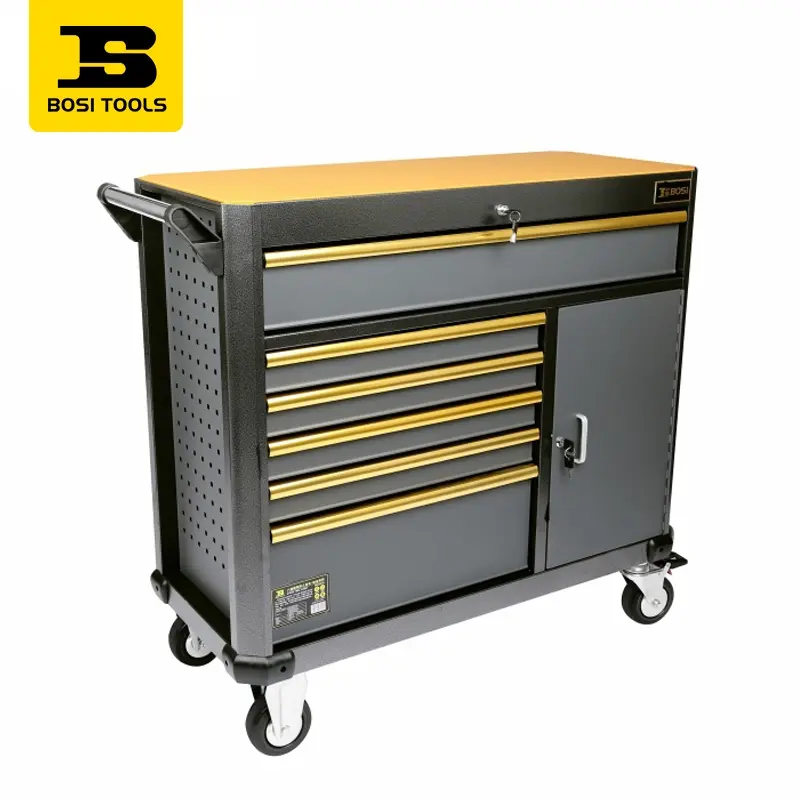
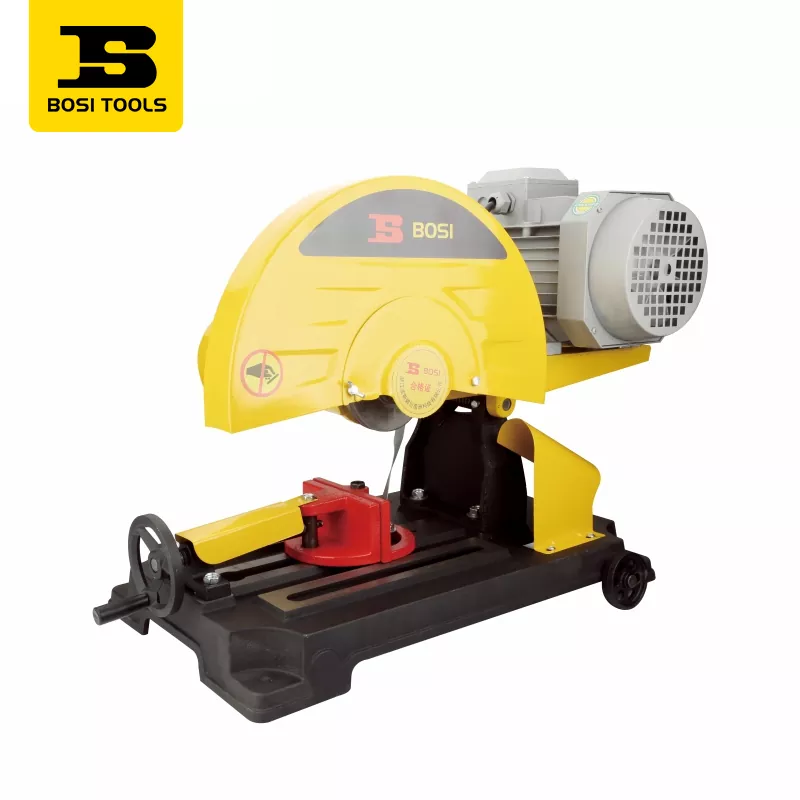
Engineering Cutting Machine
BOSI, as a professional electric tools supplier in China, can offer engineering cutting machine, which boasts a powerful 3KW output, a 400mm saw blade diameter, a rated voltage of 380V, and a no-load speed of 2880r/min. It features a reinforced welded base for precise cutting and a pure copper motor for sustained power. Suitable for high-strength engineering cutting of concrete pavements, large stone materials, and metal profiles. Contact us today for factory direct prices and samples.
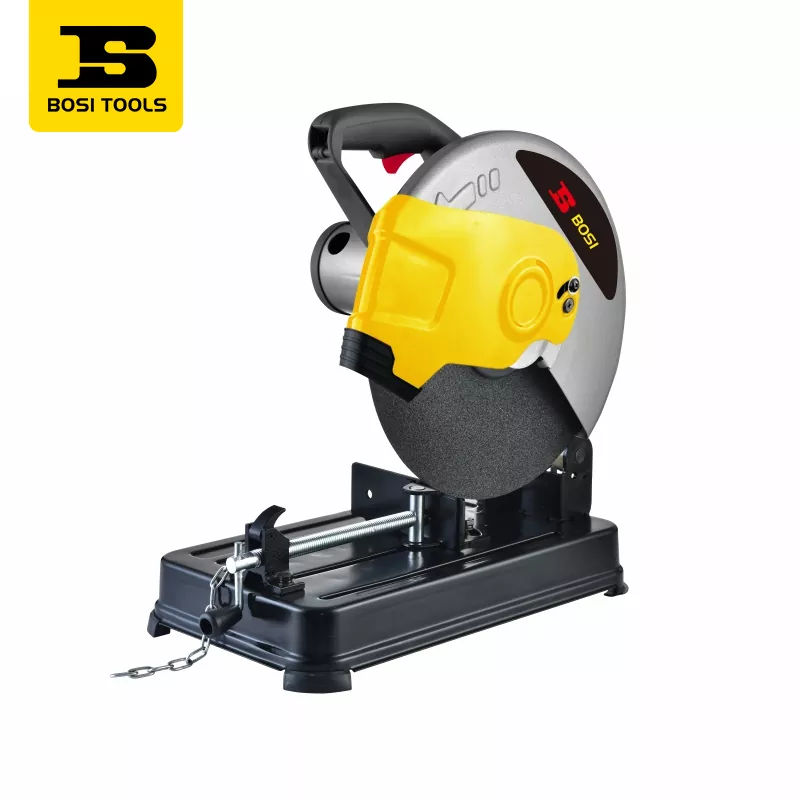
355mm Profile Cutting Machine
BOSI is a professional manufacturer of various kinds of manual and power tools. Our 355mm Profile Cutting Machines are available in 2450W and 2500W models, with a 355mm saw blade diameter. Features include a semi-enclosed protective design, a quick-clamping system, a thickened base plate, a D-shaped extra-long handle, external carbon brush protection, cutting depth limit, and a chip guard. The high-strength aluminum casing is wear-resistant and drop-proof. Suitable for high-intensity cutting of steel, iron, and other metals.
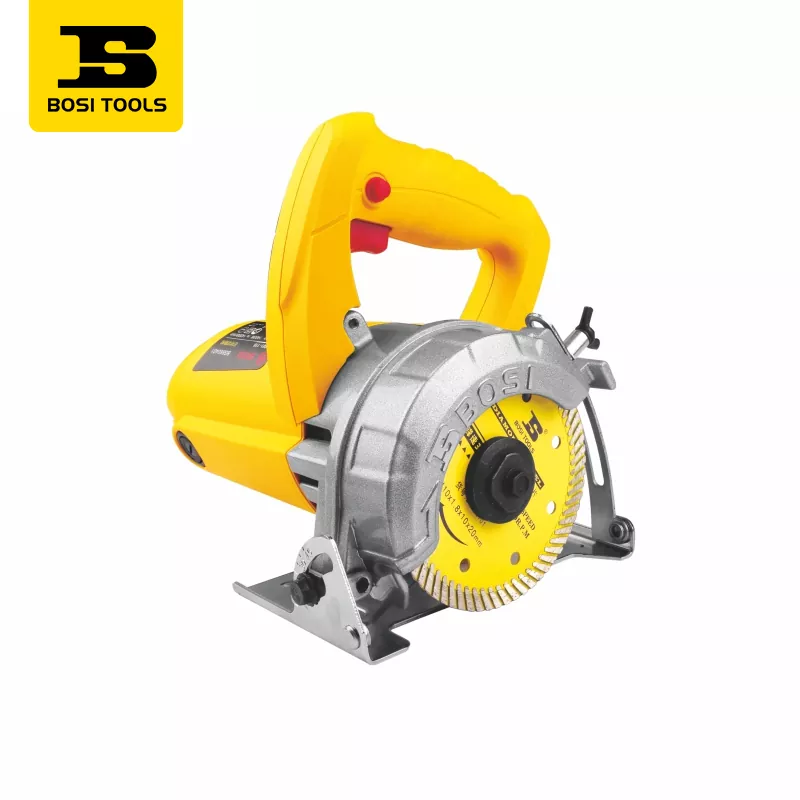
1400W Stone Cutting Machine
BOSI's 1400W stone cutting machine is equipped with a high-power pure copper motor, a 110mm saw blade diameter, and a no-load speed of 14200 rpm. It features an ergonomic handle, a thickened base plate adjustable from 0-45°, and precise and efficient cutting. Suitable for cutting materials such as tiles, stone, and concrete. Choose us as your manufacturer and supplier, get quotations and samples now!
-
E-mail