
- English
- Español
- Português
- русский
- Français
- 日本語
- Deutsch
- tiếng Việt
- Italiano
- Nederlands
- ภาษาไทย
- Polski
- 한국어
- Svenska
- magyar
- Malay
- বাংলা ভাষার
- Dansk
- Suomi
- हिन्दी
- Pilipino
- Türkçe
- Gaeilge
- العربية
- Indonesia
- Norsk
- تمل
- český
- ελληνικά
- український
- Javanese
- فارسی
- தமிழ்
- తెలుగు
- नेपाली
- Burmese
- български
- ລາວ
- Latine
- Қазақша
- Euskal
- Azərbaycan
- Slovenský jazyk
- Македонски
- Lietuvos
- Eesti Keel
- Română
- Slovenski
- मराठी
- Srpski језик
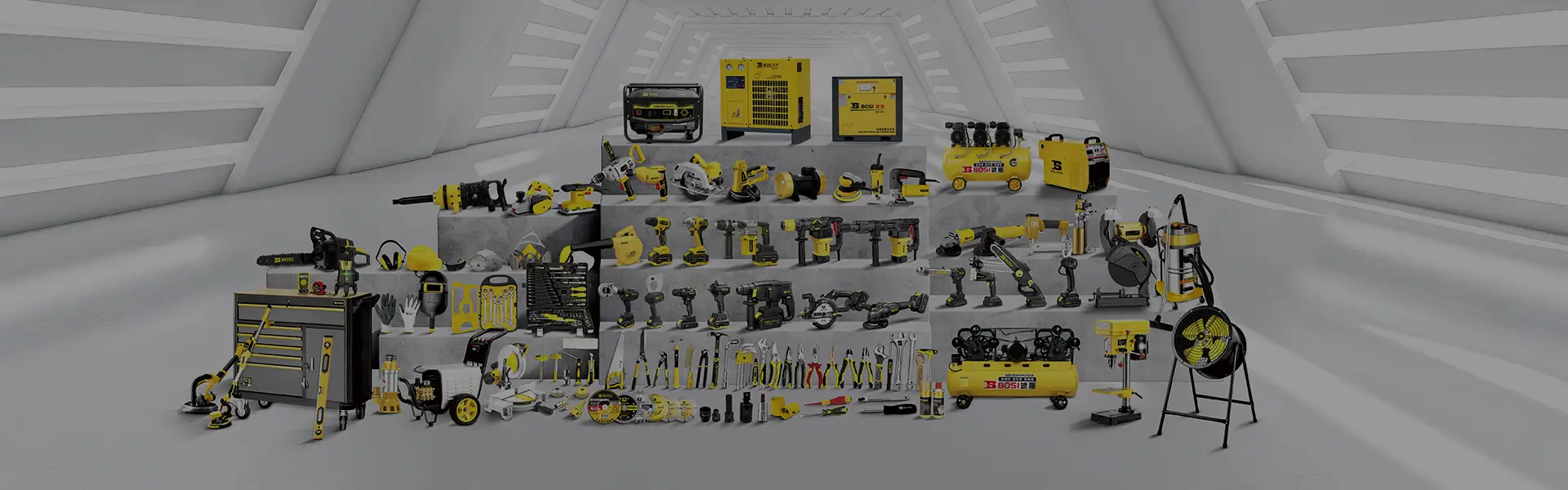
Easy-to-Use Manual Clamping Tools Factory
BOSI Tools is a manual clamping tool manufacturer from China, offering a product range that includes European style wire pliers, European style pointed nose pliers, Carbon steel forging wire clamps, Quick adjustment water pump clamps, D-type bolt cutters, European-style diagonal pliers, Round-mouth bolt cutters (chrome vanadium steel), and Heavy-duty pipe wrenches (plastic-coated handle).
From premium carbon steel forgings to chrome vanadium steel reinforced jaw heads, from high-frequency quenched cutting edges to dual-color eco-friendly non-slip handles—BOSI provides professional clamping and cutting solutions for electricians, plumbers, sheet metal workers, and equipment maintenance technicians through solid material craftsmanship and a comprehensive range of plier specifications.
We support need-based recommendations and custom development, and look forward to your inquiries.
Working Principle
The mechanics of manual clamping tools fundamentally combine the lever principle with material hardness.
Taking European style wire pliers and European style pointed nose pliers as examples, force is applied by gripping the handles with both hands. This force is transmitted through the hinge axis to the jaw head. The jaw's cutting edges, after undergoing high-frequency quenching, possess a hardness far exceeding that of the material being cut. When the upper and lower edges close, they concentrate shear stress onto a single point, fracturing metal wires such as copper and iron.
European-style diagonal pliers orient their cutting edges at an angle of approximately 15° to 30° relative to the handle axis, allowing the cutting plane to sit flush with the workpiece surface, specifically designed for flush-cutting electronic pins and cable tie tails.
Carbon steel forging wire clamps feature a laterally oriented jaw design, utilizing long handles to generate high torque for severing multiple strands of iron wire or rebar tie wire in a single cut.
The quick-adjustment water pump clamp is centered on a labor-saving eccentric structure; pressing the adjustment button allows for rapid switching of the jaw opening.
The thin-profile jaw adapts to confined spaces, automatically forming a three-point contact lock when gripping water pipe fittings or round nuts.
D-type bolt cutters and round-mouth bolt cutters (chrome vanadium steel) go a step further, achieving a self-locking mechanism through a toggle linkage.
When the jaws grip the workpiece and the handles continue to close, the linkage passes a dead-center position, locking the jaws in place so they will not release even when the handles are let go. A knurled screw adjusts the jaw opening to accommodate different workpiece thicknesses. Heavy-duty pipe wrenches (plastic-coated handle) combine precision-engraved gripping teeth with a long lever arm.
The offset upper and lower teeth bite into the pipe wall, and the tooth face self-tightens without slipping when rotational force is applied. Eight specifications, ranging from 8" to 48", accommodate different pipe diameters.
Common Problems and Solutions
|
Common Problem |
Cause Analysis |
Solution |
Corresponding BOSI Design |
|
Chipped or rolled cutting edge |
Cutting materials exceeding rated capacity; using plier jaws as a wrench to twist bolts. |
Use according to the maximum cutting capacity specifications; never substitute the cutting edge for a wrench. |
High-frequency quenched cutting edges provide superior shearing force, starting at 2.5mm for copper wire and 1.8mm for iron wire. |
|
Loose jaw head, wobbly hinge |
Long-term overloading has deformed the hinge axis or loosened the riveted joint. |
Check if the hinge pin is bent and replace if necessary; apply lubricating oil moderately. |
Forged premium carbon steel offers high overall strength; hinge fit precision complies with QB/T standards. |
|
Clamping slips, unable to grip workpiece |
Worn tooth surface or oil contamination; Quick adjustment water pump clamp opening not properly locked in place. |
Clean oil and dirt from the jaws; press the quick-adjustment button to switch to the appropriate opening and confirm it clicks into place. |
Quick adjustment water pump clamp switches rapidly; labor-saving eccentric structure locks automatically; Heavy-duty pipe wrenches feature a precision-engraved gripping design. |
|
D-type bolt cutters cannot lock or unlock |
Improper adjustment of toggle linkage mechanism or deformed linkage bars. |
Rotate the adjustment bolt at the tail section to the correct opening size; if unable to unlock, pry the release lever outward. |
Round-mouth bolt cutters (chrome vanadium steel) provide a clamping torque over 30% greater than standard, with a heat-treated chrome vanadium steel jaw head. |
|
Handle adhesive failure or slippery grip |
Aging of ordinary hard plastic handle; oil and dirt contamination. |
Clean oil and dirt from the handle; replace the handle sleeve if aging or adhesive failure occurs. |
Dual-color eco-friendly non-slip handles and plastic-coated handles are anti-slip and labor-saving, maintaining a controlled grip even with sweaty or oily hands. |
Our Clamping Tools vs. Other Brands: Why Choose BOSI?
|
Comparison Dimension |
BOSI Clamping Tools |
Same-Price Generic Brands |
Imported High-End Brands |
|
Material & Forging |
Premium carbon steel forging as the base material; Round-mouth bolt cutters upgraded to chrome vanadium steel; jaw heads integrally heat-treated. |
Recycled steel made from scrap, inconsistent hardness, incomplete quenching. |
Uniform alloy or chrome vanadium steel grades, but 2 to 3 times more expensive for the same specifications. |
|
Cutting Edge Performance |
High-frequency quenched cutting edges; European style wire pliers cut copper wire up to 3.0mm and iron wire up to 2.4mm; European-style diagonal pliers cut copper wire up to 3.2mm. |
Relatively soft cutting edges that roll when cutting copper wire, and struggle to cut iron wire. |
High hardness and long service life, but cutting edge replacement costs are expensive. |
|
Clamping & Self-Locking |
Round-mouth bolt cutters (chrome vanadium steel) feature a chrome vanadium steel jaw head with high-frequency welding, delivering over 30% more clamping torque than standard; Heavy-duty pipe wrenches cover 8 specifications from 8" to 48". |
D-type bolt cutters have loose linkages that fail to lock; Heavy-duty pipe wrenches suffer from rapid tooth face wear. |
Reliable clamping, but with a significant price premium for the specifications. |
|
Handle Comfort |
Dual-color eco-friendly non-slip handle / plastic-coated handle, resistant to oil and hand sweat, providing a non-slip grip. |
Hard plastic or ordinary rubber, prone to aging and becoming sticky. |
Ergonomic handles, but high retail price for individual pieces. |
|
Standards & Warranty |
Entire product line complies with the QB/T series standards; specification parameters are clearly labeled; cutting capacity is explicitly stated. |
No standard numbers or vague labeling; warranty coverage is absent. |
Complete range of standards, comprehensive after-sales service, but long factory return turnaround time. |
BOSI clamping tools are primarily constructed from carbon steel forgings. Through high-frequency quenching of cutting edges and precision-engraved gripping designs, they ensure reliable cutting and clamping capabilities. They approach professional-grade standards in core plier performance, providing complete plier solutions from electrical work to plumbing at a pragmatic price point.
How to Choose the Right Clamping Tools?
Choosing the right pliers fundamentally depends on matching them to the work object and the gripping or cutting requirements.
For electrical wiring and cutting wires within trunking, select European-style diagonal pliers; their 15° to 30° angled cutting edge cuts pins flush against a circuit board leaving no protruding length.
For stripping wires and bending wire ends in electrical work, choose European style pointed nose pliers; the tapered jaw head, available in 6" and 8" sizes, reaches into confined spaces, and the dual-color eco-friendly handle is suited for extended gripping.
For general-purpose gripping and cutting, use European style wire pliers; three specifications, 6"/7"/8", cover common wire diameters from 2.5mm copper to 2.4mm iron.
For the centralized cutting of bundled iron wires, select Carbon steel forging wire clamps; their laterally oriented cutting edge and long handles cut multiple strands simultaneously with less effort.
For water pipe repairs and round nut removal/installation, choose Quick adjustment water pump clamps; the 10"/12" thin-profile jaws, combined with a labor-saving eccentric structure, allow quick-adjust clamping for pipe diameters from 35 to 42mm.
For workpiece holding and non-release gripping, select D-type bolt cutters or similar; the 11" D-type bolt cutters with a 65mm jaw opening are suitable for sheet metal shaping, while Round-mouth bolt cutters (chrome vanadium steel) provide over 30% more clamping torque than standard models.
For pipe installation and rotating pipes, select Heavy-duty pipe wrenches (plastic-coated handle); eight specifications from 8" to 48" cover openings from 27mm to 141mm, and the plastic-coated handle prevents slipping while saving effort.
When purchasing, confirm that the listed cutting capacity matches the actual working wire diameter, and strictly avoid use beyond the rated range.
Safety Precautions for Use
Personal Protective Equipment
Wear safety goggles when cutting hard wire or operating D-type bolt cutters, as wire ends may fly off upon severing.
When working on live circuits, only use dedicated electrician's pliers with intact insulated handles; ordinary pliers must not be used for hot work.
Cutting Specifications
Before cutting, confirm that the material's wire diameter does not exceed the maximum cutting capacity marked on the tool—the upper limit for European style wire pliers is 3.0mm for copper wire and 2.4mm for iron wire; for European-style diagonal pliers, the upper limit for copper wire is 3.2mm.
It is strictly prohibited to use the cutting edges as a wrench to twist bolts or to hammer the jaw head to increase shearing force.
Clamping Operation
When clamping a water pipe with Quick adjustment water pump clamps, confirm that the jaw opening has clicked into the appropriate position; the eccentric structure locks automatically, but you must confirm there is no slippage before rotating.
After locking D-type bolt cutters, check that the linkage has passed the dead-center point and is locked; do not apply excessive torque while in the locked state—when releasing, pry the release lever outward rather than forcing the handles apart.
When using Heavy-duty pipe wrenches, the toothed jaw face should bite into the pipe wall in the direction of rotation; reverse installation will damage the pipe wall and cause slippage.
Handle Usage
If using pliers to hold a workpiece while striking it, strike only the flat section of the jaw head, and never subject the handles to hammer impacts.
If the handle sleeve becomes damaged or loose, replace it promptly to prevent hand pinching injuries.
Maintenance and Storage
After work, wipe cutting oil and metal debris from the jaw head, and keep it dry to prevent rust. If a cutting edge develops a slight roll, it can be dressed with an oilstone; severely chipped edges must be replaced.
Regularly apply oil to the hinge axis to keep operation smooth. The entire product line complies with QB/T series standards; when storing, avoid dropping heavy objects onto the jaw head, which could deform the hinge.
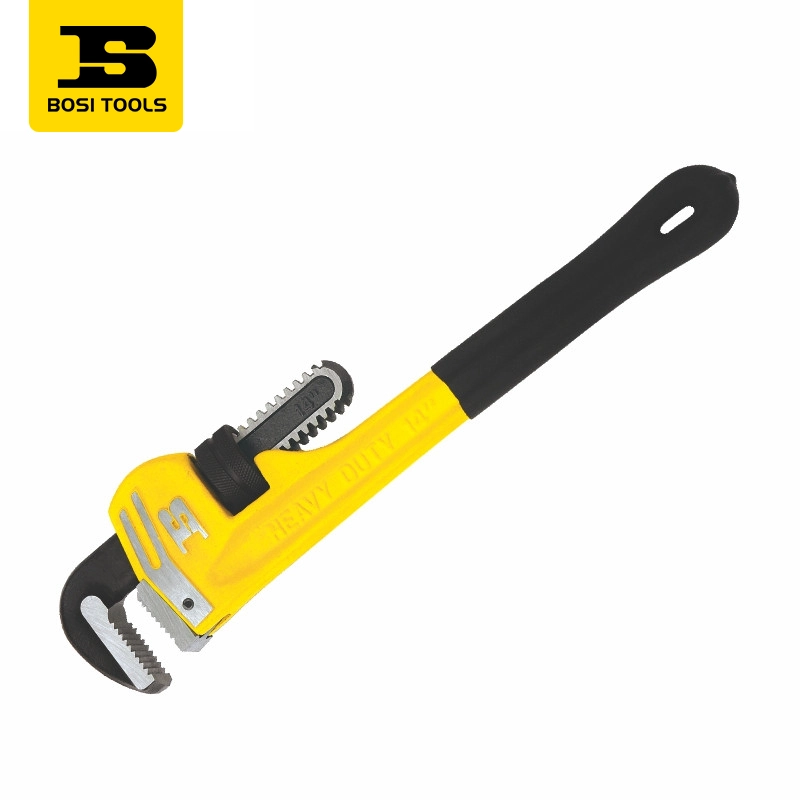
Plastic-coated Handle Heavy-duty Pipe Wrenches
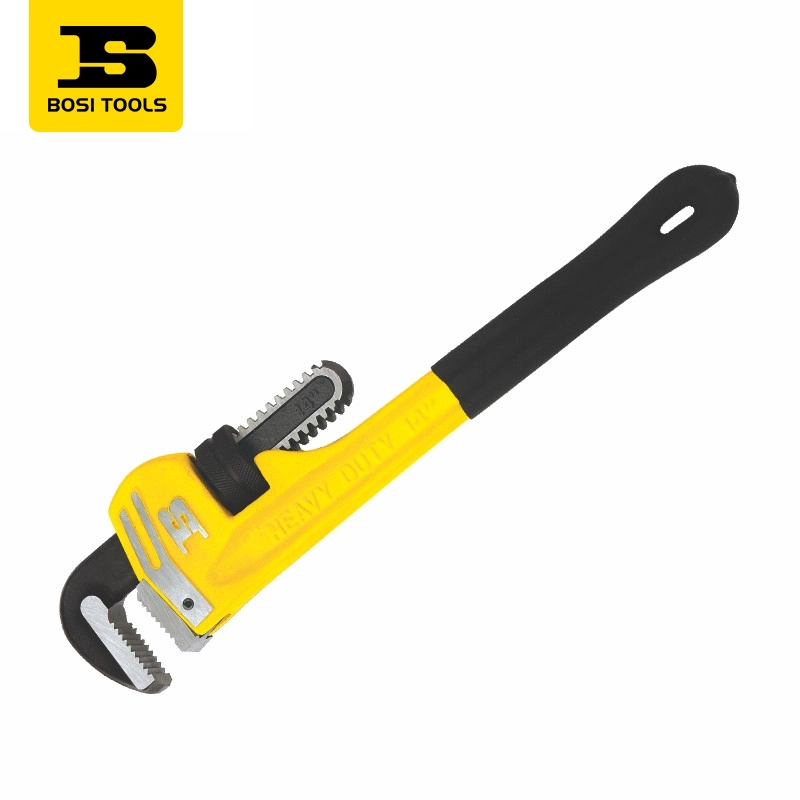
BOSI, as a supplier, offers Plastic-coated Handle Heavy-duty Pipe Wrenches, which are professional-grade pipe tools. They are available in eight sizes, from 8 inches to 48 inches, with maximum openings ranging from 27mm to 141mm. The wrench heads are made of high-quality forged carbon steel, with overall heat treatment, a precision-locking design, and a strong grip. The PVC-coated handles are non-slip and easy to use. They conform to standard QB/T2508. Inquiries and samples are welcome.
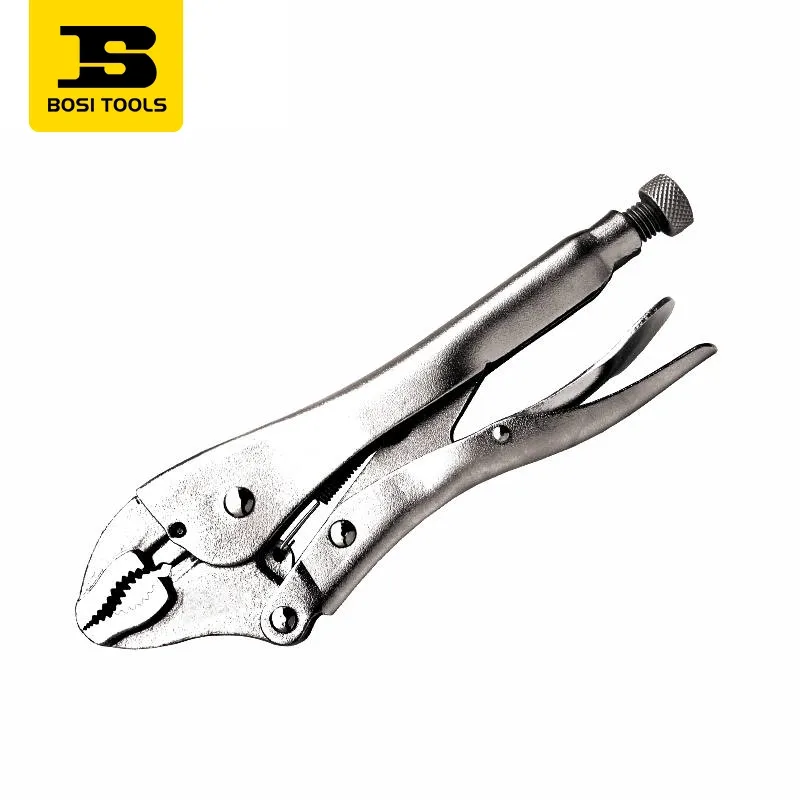
Chrome Vanadium Steel Round-mouth Bolt Cutters
BOSI's 10-inch Chrome Vanadium Steel Round-mouth Bolt Cutters offer over 30% higher clamping torque than the standard. The thickened jaws are forged from chrome vanadium steel, heat-treated, and the jaws and handles are high-frequency welded. Maximum opening is 51mm, conforming to standard QB/T4062. Suitable for powerful clamping of round workpieces. Inquiries and samples are welcome.
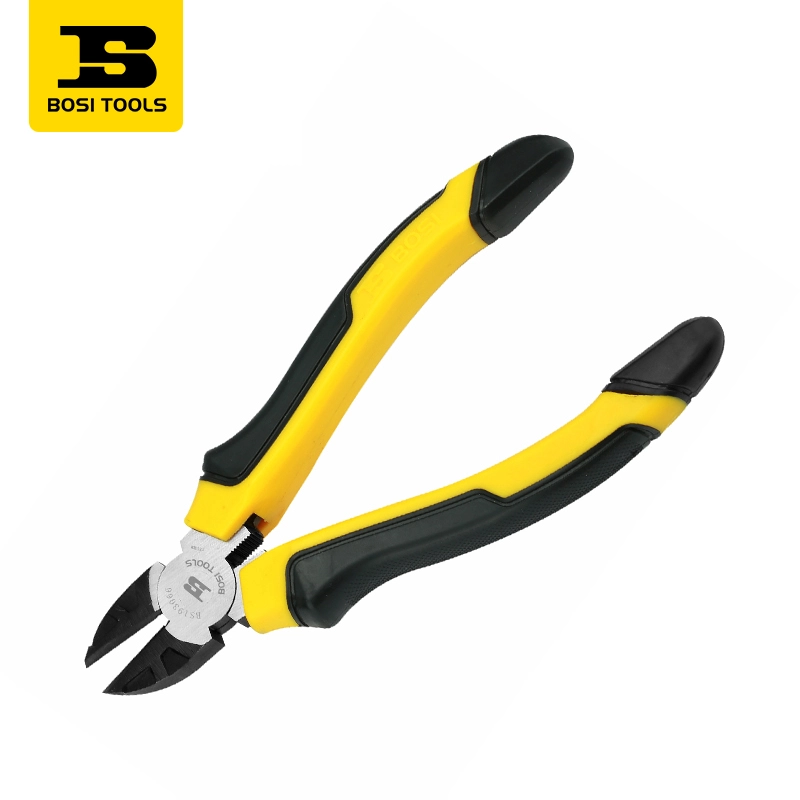
European-style Diagonal Pliers
BOSI European-style diagonal pliers from China are professional-grade cutting tools. Available in 6-inch and 7-inch sizes, they are forged from high-quality carbon steel with high-frequency hardened blades, suitable for cutting copper and iron wires. Features a two-tone environmentally friendly, non-slip handle. Complies with standard QB/T2441.1. Suitable for precise, flush cutting in electronics repair, electrical wiring, and other similar applications. Inquiries and samples are welcome.
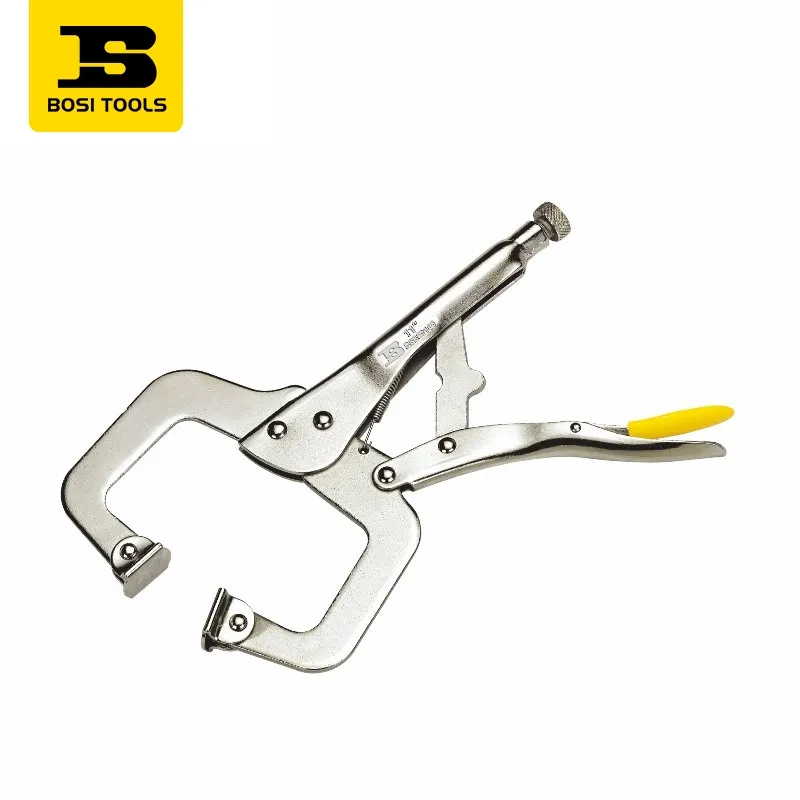
D-type Bolt Cutters
The D-type Bolt Cutters produced by manufacturer BOSI are 11 inch in size with a maximum opening of 65mm. The pliers head is forged from high-quality carbon steel, heat-treated, and easy to use with good clamping effect. Implement standard QB/T4265. Suitable for welding fixation, workpiece clamping and other scenarios. Welcome to inquire for samples.
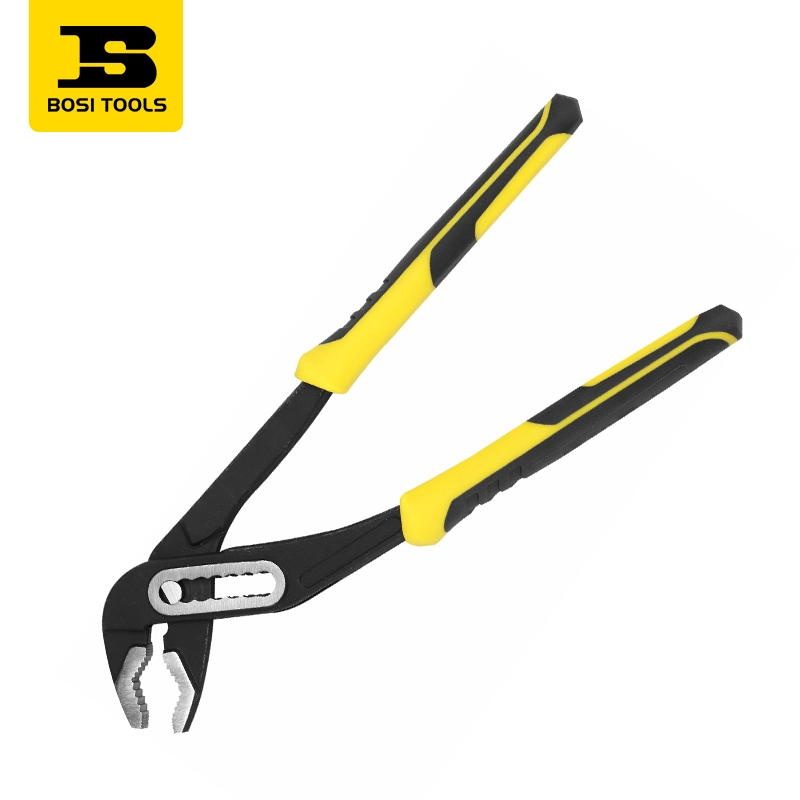
Quick Adjustment Water Pump Clamp
BOSI supplier provides Quick Adjustment Water Pump Clamps at a special price for new products. Available in two sizes of 10 inches and 12 inches, forged from high-quality carbon steel and subjected to overall heat treatment. Quick adjustment structure with one click switch opening, labor-saving eccentric structure reduces wrist fatigue, and thin jaws are suitable for narrow spaces. Implement standard QB/T2440.4. Welcome to inquire.
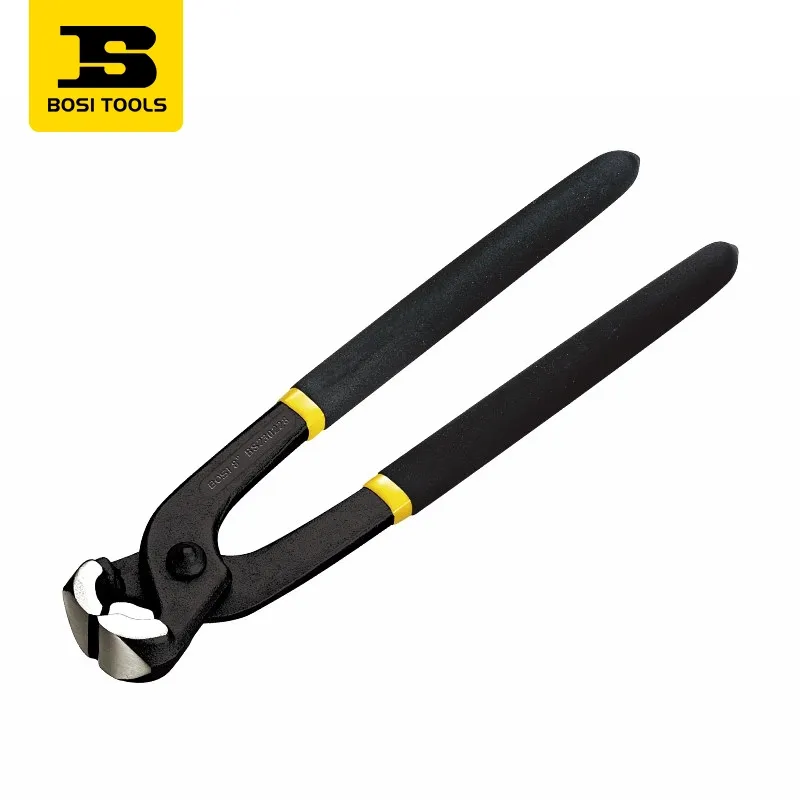
Carbon Steel Forging Wire Clamp
BOSI factory's Carbon Steel Forging Wire Clamps are professional-grade high-strength cutting tools. 8-inch size, forged from high-quality carbon steel, with heat-treated jaws and a finely polished surface. Complies with QB/T4266 standard. Suitable for cutting cable ties, wire, etc., cutting cleanly without burrs. Bulk discounts available, inquiries welcome.

-
E-mail