By BOSI Tools
Hand tools use human effort; power tools use an external energy source, such as electricity or compressed air. Choose manual tools when access, small adjustments, or a short setup favor them. Choose powered tools when repeated work or material removal justifies the equipment and preparation.
When comparing hand tools vs power tools, I start with the finished job: the required fit, cut, hole, or fastening result. Then I compare the complete working method. A faster motor is useful only if the process still delivers an acceptable part.
In this guide
Hand Tools vs Power Tools: Key Differences
The energy source changes how you perform the work. It does not, by itself, establish accuracy, safety, or the lowest cost. Use this comparison to identify what needs checking for your particular operation.
| Factor | Hand tools | Power tools | What decides the choice? |
|---|---|---|---|
| Energy supply | Force comes from the operator. | A motor or another external source supplies working energy. | Available power, working location, and equipment suitability. |
| Preparation | A suitable tool may be ready after a brief condition and fit check. | May need an accessory, settings, guards, a battery, or a supply connection. | Count preparation for both methods, including workholding. |
| Repeated work | Repeated strokes or turns add operator effort. | Powered motion can reduce repeated manual effort. | Batch size, complete cycle time, and ergonomic assessment. |
| Control and accuracy | Direct feedback can help with small adjustments. | Guides, fixtures, and controlled settings can support consistent results. | The tolerance and how the result will be measured. |
| Access | A compact manual tool may reach a restricted space. | The body, battery, accessory, and any hose or cable need clearance. | Check the entire motion and withdrawal path. |
| Physical demands | Grip force, posture, and repetition still matter. | Weight, reaction force, trigger use, noise, and vibration may matter. | Assess the tool, user, and workstation together. |
| Ownership cost | Include consumables, maintenance, and labor. | Also consider the power system, accessories, servicing, and downtime. | Compare cost per accepted job at the expected workload. |
Ergonomics deserves its own check. Compare the repeated force needed for manual work with the weight, grip, reach, and reaction forces of the powered setup. Include the operator's working position in the trial.
What Are Hand Tools?
In this comparison, hand tools are manually operated tools that use human effort to grip, turn, strike, cut, or shape material. Screwdrivers, spanners, ratchets, pliers, hammers, files, and manual saws are common examples.
A ratchet mechanism changes how a handle transmits movement; it does not make the tool electrically powered. Likewise, a manual clamp can hold a workpiece while a powered tool performs the cutting or drilling.
Manual tools are useful when you need a straightforward setup or direct feedback at the workpiece. Their suitability still depends on the task. Reaching a screw with a long driver does not help if the bit cannot sit squarely in its recess.
What Are Power Tools?
Power tools use an external energy source to produce the motion or force needed for a task. A drill rotates a bit; a reciprocating saw moves a blade back and forth. The operator still positions, supports, and controls the tool.
Types of power tools by power source
- Corded electric tools draw electricity through a cable. Plan the supply connection and cable route as part of the job.
- Cordless electric tools draw electricity from a battery. Include charging, compatible packs, and the tool's working weight in the selection.
- Pneumatic tools use compressed air. They require a suitable air supply, hose, and connections.
These are common workshop examples. Other portable power-tool categories include liquid-fuel, hydraulic, and powder-actuated tools. Each has its own operating conditions and precautions.
Cordless tools are a type of power tool. A battery removes the need for a power cable at the tool, but does not remove the need to check the working environment and the intended application.
Common Hand and Power Tools: Examples and Uses
A useful tool list connects each tool to an operation. Two tools that can both turn a fastener may serve different stages of assembly.
Common hand tool types and uses
| Tool type | Typical use | Selection check |
|---|---|---|
| Screwdriver | Starting, removing, or adjusting screws. | Correct bit profile and size; straight access to the screw. |
| Spanner or ratchet | Turning compatible nuts and bolts. | Correct size, engagement, and handle clearance; a separate specified torque process where required. |
| Pliers or clamp | Gripping, positioning, or holding within the tool's intended use. | Jaw shape, capacity, surface protection, and secure holding. |
| Hacksaw or file | Manual cutting or controlled material removal. | Blade or file matched to the material, with suitable support and access. |
Common power tool types and uses
| Tool type | Typical use | Selection check |
|---|---|---|
| Drill driver | Drilling or screwdriving with the appropriate accessory and mode. | Material, bit, speed range, fastening requirement, and workholding. |
| Impact wrench | Loosening or driving compatible fasteners using impact action. | Suitable impact-rated accessories, joint limits, and the required tightening procedure. |
| Reciprocating saw | Powered cutting with a blade selected for the workpiece. | Blade suitability, access, workpiece support, and the required cut quality. |
| Sander or grinder | Surface preparation or material removal within the tool's intended use. | Approved accessory, rating, guarding, and dust or spark controls. |

19-in-1 ratchet screwdriverThe BOSI specification lists S2 alloy-steel bits, bidirectional ratcheting, and dimensions of 212 × 35 × 35mm. Check that envelope and bit engagement against the working space.

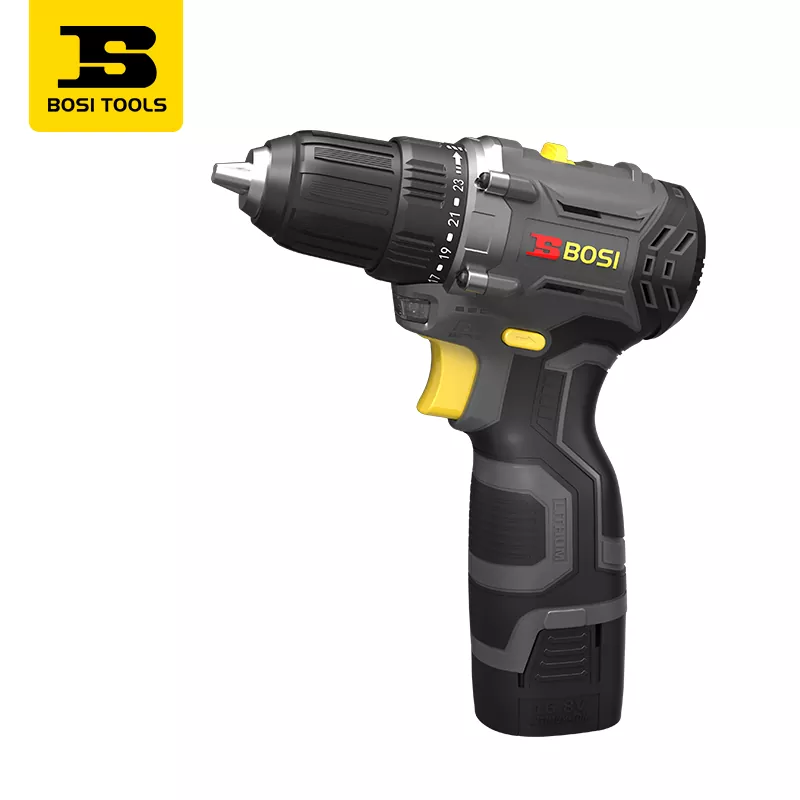
Cordless drill driverA powered option to evaluate for repeated drilling or driving. Mode, accessory, and joint requirements decide its use. BOSI drill driver details.
What our drill specifications change in the selection
The BOSI brushless drill-driver specification lists two configurations. Comparing their fields shows which features change when moving from one to the other.
| Specification | 16V configuration | 20V configuration | Selection meaning |
|---|---|---|---|
| Listed maximum torque | 50N·m | 60N·m | Compare against the intended task; neither value establishes the torque delivered to a particular joint. |
| Battery capacity | 2.0Ah | 2.0Ah | The matching Ah figure alone does not establish equal runtime across different voltage configurations. |
| No-load speed | 0–500 / 0–1,800r/min | 0–500 / 0–1,800r/min | The listed speed ranges are the same; select working conditions for the bit and material. |
| Maximum chuck clamping diameter | 10mm | 10mm | Check accessory shank fit. This field is not a universal maximum hole diameter. |
| Adjustment setting | 23+1 | 23+1 | Settings support setup; they are not individual certified torque values. |
The higher-voltage configuration changes the listed maximum torque here, while the chuck size and speed ranges remain the same. For an occasional repair, first compare access and the joint requirement with the manual screwdriver. For repeated driving or drilling, evaluate the selected powered configuration with the actual bit, workpiece, and fixture.
When Should You Use Hand Tools or Power Tools?
Select the tool for the task, material, access, quantity, and acceptance requirement. If either method cannot meet the required result or working conditions, a time comparison is premature.
When hand tools are a practical choice
Consider a manual tool for an occasional adjustment, a short repair, or restricted access that suits its size and movement. A few accessible screws may require less preparation with a manual driver. A small finishing allowance may be easier to approach gradually with a suitable file.
Check the workload as well as the individual operation. A method that feels manageable once may become demanding when repeated throughout a shift.
When power tools are a practical choice
Consider a powered method when repeated movement, substantial material removal, or the available working time supports it. Include the equipment around the tool: the fixture, accessory, energy supply, and inspection method can determine whether the change works.
| Task | Manual method to consider | Powered method to consider | Deciding check |
|---|---|---|---|
| Occasional screw adjustment | A correctly fitting screwdriver. | A suitable driver where access and control permit. | Access, screw condition, and risk of damaging the part. |
| Repeated screw assembly | Manual driving for low quantity or particular access needs. | A suitable driver and controlled assembly process. | Total cycle time with the same joint acceptance criteria. |
| Small cutting job | A suitable hacksaw or other intended manual cutter. | A suitable saw if its setup and movement fit the job. | Material, section, blade, support, and finish requirement. |
| Repeated cuts | Manual cutting if volume and effort remain practical. | A suitable powered saw with repeatable support or guidance. | Cut quality and complete batch time, including deburring. |
| Drilling holes | An appropriate manual drill for a limited, suitable task. | A drill suited to the material, diameter, and duty. | Hole location, size, depth, and required workholding. |
| Holding a component | A suitable vise or clamp. | A powered fixture if the process calls for one. | Secure location without movement or unacceptable distortion. |
Restricted-access repair: check the movement, not just the reach
Consider a recessed fastener behind a machine cover. A cordless driver's body might prevent the bit from lining up with the screw, while a manual driver can reach it. In another location, a long manual handle may have too little turning space and a compact powered tool may fit better.
I would check three clearances: space to seat the bit or socket fully, space to operate the tool, and space to withdraw the loosened fastener. A ratchet needs enough handle movement to advance its mechanism. An extension adds reach but also changes the space needed to keep the tool aligned.
The screw recess matters as much as access. CCOHS screwdriver guidance calls for matching both the type and size of the tip; Phillips and Pozidriv, for example, are not interchangeable simply because both look like cross-head designs. If the tip rides out, stop and check engagement before adding force.
For socket work, our 1/2-inch manual ratchet specification lists a 255mm length and a 24-tooth mechanism. The tooth pitch is 360° ÷ 24 = 15°. Use that as a mechanism reference, then check the real handle clearance, socket engagement, and surrounding obstructions; it is not a guarantee that the complete tool will operate in every 15° gap.
Repeated fastening: compare a controlled assembly process
If a screw becomes difficult to turn, I would first check the bit fit, alignment, thread condition, and specified joint procedure. Increasing the driving force before finding the cause risks turning a setup problem into a damaged part.
For a repeated fastening operation, I would compare methods on the same joint and use the same acceptance criteria. I would include positioning, starting the thread, driving, checking, and any correction. Measuring only the trigger time leaves much of the job out of the comparison.
A drill's numbered clutch setting should be treated as a setup control unless its documentation establishes a torque value for the application. Where a joint has a specified tightening requirement, use the prescribed procedure and suitable verified tooling. An ordinary ratchet or impact wrench alone does not establish that the requirement has been met.
The reason for keeping these checks separate is mechanical. NASA's Fastener Design Manual, in its Fastener Torque section, explains that thread friction, bearing-surface friction, coatings, and lubrication affect the relationship between torque and bolt preload. A tool's advertised maximum torque is therefore insufficient evidence of the finished joint's clamp load. A later check should not be assumed to undo earlier overtightening.
For a batch of similar joints, keep the fastener, mating parts, surface condition, and starting method consistent during the comparison. Check that the driver can remain aligned when the fixture is loaded. Include worn-bit replacement and any awkward repositioning in the trial. A good result on an empty bench does not establish that the same method works inside the assembly.
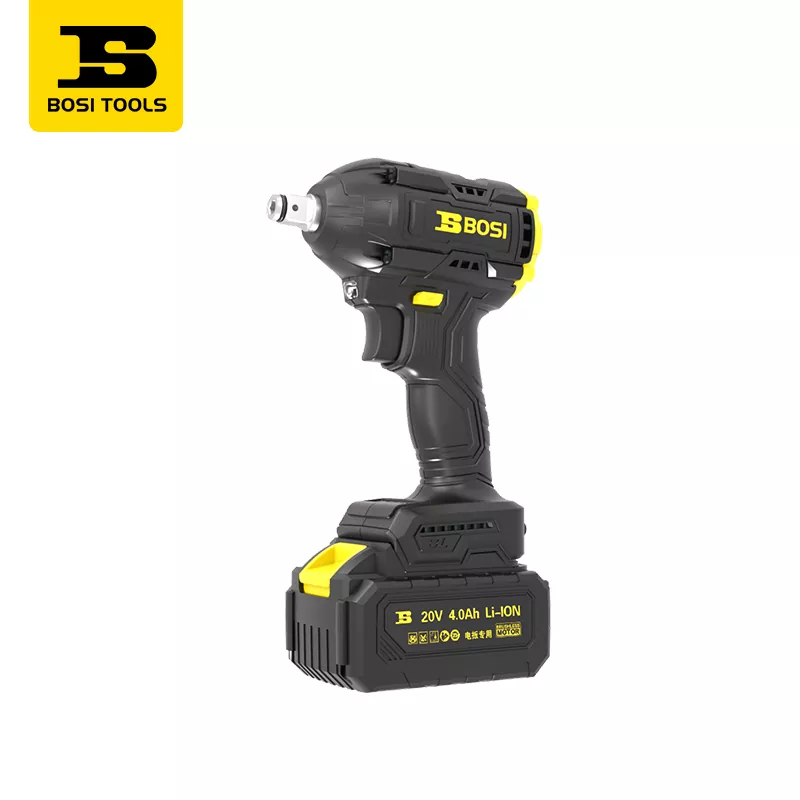
The BOSI brushless wrench parameter table provides another useful distinction: the 350N·m configuration lists a 20V/4.0Ah battery and a 1/2-inch drive, while the 1,200N·m configuration lists 20V/6.0Ah and a 3/4-inch drive. Changing configuration can change the accessory interface as well as the published output. Match the exact configuration and impact-rated accessories to the job. A shared 1/2-inch drive size between a manual ratchet and a powered wrench does not make all their accessories interchangeable.
Metal cutting: choose for the section and the finished edge
For a short piece of metal stock, a hacksaw may be practical if the frame clears the work and the stock can be held securely. Our hacksaw frame specification lists a 300mm blade fit and overall dimensions of 395 × 160 × 28mm. The blade length is an accessory-fit dimension; the complete frame envelope matters when checking access.
The BOSI brushless reciprocating saw specification lists a 20V/4.0Ah battery configuration, a 20mm reciprocating stroke, and tool-free blade replacement. The stroke describes blade movement. It does not specify maximum stock thickness or the time needed to cut it.
Record whether the stock is solid, thin sheet, or hollow section, together with its material, required length, squareness, and finish. Select the blade and cutting conditions for that stock. On a manual hacksaw, check blade tension and frame alignment; on either method, check support and avoid forcing an unstable cut.
I would compare the finished cut after deburring. If a powered method leaves more finishing work, include it in the cycle. Where length and squareness are tightly specified, consider a guided cutting process rather than assuming a freehand reciprocating saw is the natural upgrade from a hacksaw.

Hacksaw frameEvaluate blade suitability, frame clearance, and workholding for the intended cut. BOSI hacksaw frame details.
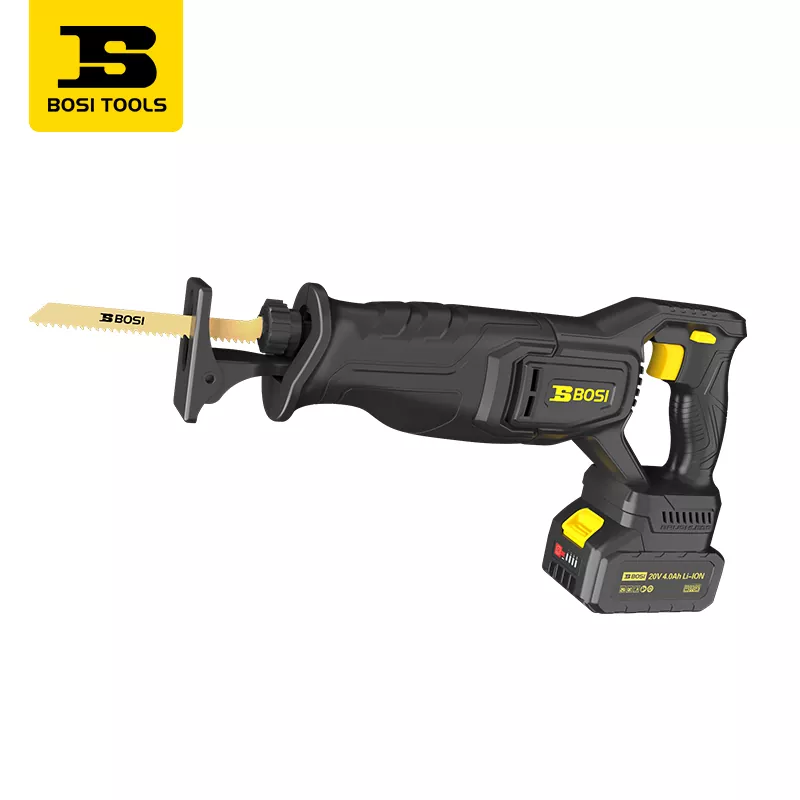
Reciprocating sawEvaluate blade, support, stroke clearance, and the required finish before selecting the method. BOSI reciprocating saw details.
Drilling: match the bit, holding method, and hole requirement
For drilling, the choice usually moves beyond manual versus powered and into the drilling setup. A cordless drill can provide mobility for repair work. A guided or stationary setup may deserve consideration when hole location, alignment, or repeated positioning is difficult to control by hand.
Specify the material, hole diameter, depth, and whether the hole passes through the part. Select the bit and cutting conditions from the relevant instructions; the drill's advertised no-load speed is not a recommended cutting speed for every material.
CCOHS powered-drill guidance calls for bits matched to the drill's capacity, material, and work, correctly seated in the chuck. It also calls for securing small stock against twisting or spinning, rather than holding it in one hand while drilling with the other.
Inspect hole position and size after the operation. If the entry point wanders, check the locating method and setup before increasing speed or thrust. If the work moves, correct the holding arrangement before continuing the comparison.
When the result is poor, diagnose before changing tool categories
| Observed problem | First checks | What a tool change must demonstrate |
|---|---|---|
| Driver slips out | Bit type, size, wear, alignment, and screw recess condition. | Reliable engagement at the actual working position. |
| Cut wanders | Blade suitability and condition, manual blade tension, guidance, and workpiece movement. | The required dimension and cut quality after finishing. |
| Hole position varies | Reference marks, locating method, bit condition, and stock movement. | Measured location and size within the drawing requirements. |
| Work becomes tiring | Repetition, grip, posture, tool weight, reach, and required force. | A better overall working method with the new hazards assessed. |
These are starting points for inspection, not a diagnosis from the symptom alone. A powered replacement can carry the same setup error into a faster cycle.
Are Hand Tools More Accurate Than Power Tools?
Neither category is inherently more accurate. Accuracy depends on the complete method and the measured result. A manual tool can offer useful feedback, while a guided powered method can produce consistent work. Both can also produce a consistently wrong result.
Control and tactile feedback
With a manual tool, you can often feel resistance change while advancing a small amount. That feedback helps the operator respond, but it is not a dimensional measurement or a calibrated torque reading.
A powered tool can also offer controlled movement through appropriate settings, guides, stops, and workholding. The useful question is whether the setup lets the operator approach the required result without exceeding it.
Accuracy and repeatability
For workshop decisions, separate two checks: accuracy asks how close the result is to the target; repeatability asks how closely repeated results agree under the same conditions. A stop set in the wrong position can produce a close group of holes, all offset from the drawing.
When comparing measurements, keep the checking method consistent too. Use the same reference, instrument, procedure, and working conditions so that a change in measurement method does not obscure the difference between the tools.
| Concept check | Tight group, offset | Tight group, centered |
|---|---|---|
| Spread of repeated positions | Small | Small |
| Position against the target | Offset from target | Centered on target |
| What to check next | Correct the setup reference | Confirm the result against the required tolerance |
Conceptual comparison, not measured BOSI results. A tight group can still be in the wrong position.
For a drilled component, check hole position from the drawing's datum and hole diameter as separate characteristics. Checking that a bolt fits through the hole does not establish its location. For cut-to-length work, check length and end squareness separately. Choose measuring equipment and a method that can resolve the specified requirement.
Correct the setup when results are offset; investigate movement, wear, or inconsistent handling when they scatter. Keep that check in the comparison even when one method feels easier to control.
When Do Power Tools Actually Save Time?
Power tools save batch time when the reduction in time per accepted operation outweighs the extra preparation and interruptions. The crossover depends on the job. There is no reliable universal rule such as “always use power tools above ten pieces.”
Setup time vs time per operation
Start with a simple planning model, using seconds throughout:
Total batch time = setup time + quantity × complete time per operation
For an illustrative fastening-station plan, assume manual setup takes 300 seconds and each complete operation takes 20 seconds. Assume the powered method takes 900 seconds to set up and 8 seconds per operation. The cycle figures include positioning and checking to the same acceptance requirement. These are assumed inputs, not timed product performance.
| Quantity | Manual method | Powered method | Result within this model |
|---|---|---|---|
| 20 operations | 11 min 40 sec | 17 min 40 sec | Manual is 6 minutes quicker. |
| 50 operations | 21 min 40 sec | 21 min 40 sec | Equal total time. |
| 1,000 operations | 338 min 20 sec | 148 min 20 sec | Powered is 190 minutes quicker. |
The crossover is (900 − 300) ÷ (20 − 8) = 50 operations. Below that quantity, the assumed manual setup advantage dominates; above it, the assumed powered cycle advantage dominates. If the cycle times are equal, extra setup cannot be recovered through cycle-time savings.
| Batch size | Manual method | Powered method |
|---|---|---|
| 20 operations |
11 min 40 sec
|
17 min 40 sec
|
| 50 operations |
21 min 40 sec
|
21 min 40 sec
|
| 100 operations |
38 min 20 sec
|
28 min 20 sec
|
Assume 5 min setup + 20 sec/operation manually, and 15 min setup + 8 sec/operation powered. Equal time at 50 operations: 21 min 40 sec. Calculations, not product tests.
Maintenance, changeovers, and downtime
I would use this calculation to decide what to measure at the station. A short trial should include the actual fixture, workpiece, accessory changes, and inspection steps. Record accepted output and interruptions, rather than selecting the fastest isolated operation.
Add battery changes, blade changes, cleanup, and rework when they occur. If those activities are outside the recorded cycle, add their time separately. For a purchasing decision, also include consumables, maintenance, equipment cost, and the expected workload. The simple time model does not calculate financial payback.
Which Costs Less Over the Working Life?
Compare the total cost of producing an accepted result at your expected workload. Purchase price is one input. A tool that is economical for occasional repairs can be costly to use for repeated production, while an elaborate powered setup can be difficult to justify for infrequent work.
| Cost item | What to record | Why it can change the decision |
|---|---|---|
| Equipment and setup | Tool, fixture, guards, compatible power system, and setup labor. | A bare tool price may exclude items needed to operate it. |
| Consumables | Bits, blades, sockets, abrasives, and other process consumables. | Compare replacement frequency under the same job conditions. |
| Operating labor | Preparation, handling, working time, checking, finishing, and changeovers. | Powered motion may shorten only one part of the job. |
| Availability | Charging arrangements, servicing, repair delays, and necessary backup equipment. | A stopped workstation may affect more than the tool operator. |
| Quality losses | Actual scrap, rework, replacement material, and repeat inspection. | A quick operation has limited value if it produces unacceptable work. |
Use the expected workload, not the best possible utilization
For a fair comparison, choose the same evaluation period and expected quantity for both methods. Allocate equipment costs consistently and use actual quotations or records for prices. Record extra capacity as capacity until there is work available to use it.
Saving operator minutes does not automatically produce an equivalent cash saving. Those minutes may release time for another task, reduce overtime, or create capacity that remains unused. Identify which result applies before assigning a financial value.
A practical comparison is the allocated equipment and fixture cost, plus consumables, maintenance, labor, and quality losses, divided by accepted output. Keep the basis visible. Do not divide by all attempted pieces when the two methods produce different amounts of scrap.
Plan the battery and accessory system alongside the tool
For cordless tools, check the exact battery and charger compatibility, what the selected package includes, and how charging fits the shift. Do not infer interchangeability from a similar voltage label or the same brand name alone.
Include manufacturer-specified batteries, chargers, and battery-condition checks in the equipment plan. In the BOSI examples above, the drill-driver page lists 2.0Ah packs, while the reciprocating saw lists 4.0Ah. Compare the complete selected packages and their task requirements; those figures alone do not prove compatibility or a runtime ratio. For pneumatic tools, include the required supply and connections rather than pricing only the handheld unit.
I would also check which item is most likely to interrupt the operation: a missing bit, a worn blade, an unavailable charged pack, or the tool itself. The backup plan should address that actual interruption. Buying another motor will not solve a shortage of the correct accessory.
How Hand Tools and Power Tools Work Together
A useful workshop method assigns each tool to the stage it handles well. For a cut-to-length component, I would plan the sequence around the required finished dimension and surface condition.
- Locate and hold. Mark from the correct reference and secure the component in a suitable fixture, vise, or clamp. Leave the cutting path and required tool movement clear.
- Make the cut. Choose a manual or powered saw that suits the material, section, access, and cutting requirement. Match the blade and settings to the operation.
- Finish the edge. Remove burrs or complete the required finishing operation without taking the part outside its permitted dimensions.
- Inspect the finished part. Check the specified length, squareness, and edge condition with appropriate measuring equipment.
These are examples of different cutting methods, not an interchangeable pair for every material or tolerance. If the job needs a guided, square cut, a different saw or fixture may be more appropriate than either freehand option.
The same division of work applies to fastening: positioning and thread engagement, driving, specified tightening, and acceptance checks may require different tools. Plan those stages together before comparing speed.
A practical selection checklist for a workshop or project team
Write a short task specification before requesting a sample or approving a change. It gives the supplier and the people doing the work a common basis for comparing candidates.
- Describe the workpiece. Record the material, relevant dimensions, fastener or cut type, and any surface that must remain undamaged.
- Define the finished result. State the drawing requirement or joint procedure and how the result will be checked.
- Describe the working position. Include reach, clearance, operator posture, workholding, and the available energy supply.
- State the workload. Distinguish an occasional repair from repeated work, and record batch size and changeover frequency.
- Evaluate the complete setup. Try the selected tool, accessory, fixture, and checking method together under the intended conditions.
- Keep the decision record. Compare accepted results, complete time, interruptions, physical demands, and the cost items that apply.
For a tool assortment, group candidates around those tasks rather than filling a list with manual and powered versions of everything. A useful repair set may need both a compact manual driver and a drill driver, while a particular production station may need a dedicated fixture and controlled driver.
Match sample approval to the exact configuration
The BOSI manufacturing and testing overview describes our product-development and inspection capabilities. For a sample evaluation, tie the approval record to the configuration you intend to order: tool, battery, accessory, fixture, material, and acceptance requirement.
For example, identify which drill-driver voltage configuration is being evaluated and record the selected bit and operating mode. For the hacksaw, record the blade fitted to the 300mm frame. Keep measured results with that setup, so an approval for one configuration is not silently applied to a different package.
Hand and Power Tool Safety and Maintenance
Manual operation is not a safety rating. Improper use and maintenance of either category can cause severe injuries. Select controls for the actual tool, task, and working environment.
Match the tool and accessory to the task
Check the intended use and condition of the tool, bit, blade, socket, or abrasive accessory. Follow the manufacturer's instructions for compatibility, ratings, guards, and operating limits. Remove defective equipment from use.
Secure the workpiece as the operation requires. Do not use additional force to compensate for a dull blade, poor alignment, a damaged recess, or an unstable setup. Stop and correct the cause.
Check the tool, work area, and power supply
- Inspect handles, guards, switches, cables, hoses, connections, and batteries as applicable before use.
- Isolate the energy source as instructed before accessory changes or maintenance; a cordless tool still has a power source.
- Provide suitable workholding and a clear working area. Keep people away from the operating path and likely flying debris.
- Select eye, hearing, respiratory, and other protection through the task's hazard assessment. Do not assume one PPE combination suits every tool.
- Check the site's requirements for wet areas, combustible atmospheres, dust, and electrical work. An ordinary manual tool or battery tool is not automatically suitable.
These checks follow the general approach in the OSHA tool-safety booklet; the operation still needs its applicable instructions and site controls.
For repeated work, assess grip, wrist position, vibration, tool weight, and reach. Include the loaded tool and the actual workholding arrangement. Check whether powered operation reduces the overall demands of the task, including the effort of supporting and positioning the tool.
Inspect the parts that locate and hold the work
Include the vise, clamps, stops, and contact surfaces in the inspection. Match the clamp opening, throat depth, and contact surfaces to the job; check for damage and full contact before tightening.
A clamp that reaches the part may still be poorly placed for the operation. Check that the holding arrangement leaves the tool path clear and supports the work without unacceptable movement or marking. A worn locating surface can also change the result even when the cutting or driving tool remains in good condition.
Frequently Asked Questions
Can a cordless drill replace a manual screwdriver?
A drill driver can handle suitable screwdriving tasks with the correct bit and operating mode. Keep a manual screwdriver available when its access or direct control better suits the work. Neither tool category, on its own, confirms a specified tightening result.
Are hand tools only suitable for small jobs?
No. Manual tools can perform positioning, holding, adjustment, and finishing within larger projects. Decide whether a specific manual operation is practical by checking force, repetition, access, and the required result.
Should beginners always start with hand tools?
Choose training and equipment for the intended task. A manual tool can still cut, crush, slip, or damage the workpiece. Beginners need instruction, supervision where required, and a suitable setup for either method.
For your next job, write down the material, required result, quantity, access, and inspection method. Compare the exact configurations in the BOSI manual tool range and cordless power tool range. For a workshop assortment or sample evaluation, send BOSI the task requirements and preferred configurations so the discussion starts with the work you need to complete.