Steel stranded cable cutters are specialized hand tools designed to cut multi-strand steel cables and steel wire ropes with controlled force and reduced strand deformation. Unlike ordinary wire cutters, they use dedicated blade geometry and mechanical leverage to handle high-strength stranded materials. This guide explains their construction, working principle, applications, selection criteria, safe operating practices, maintenance requirements, and key purchasing considerations for professional users and industrial buyers.
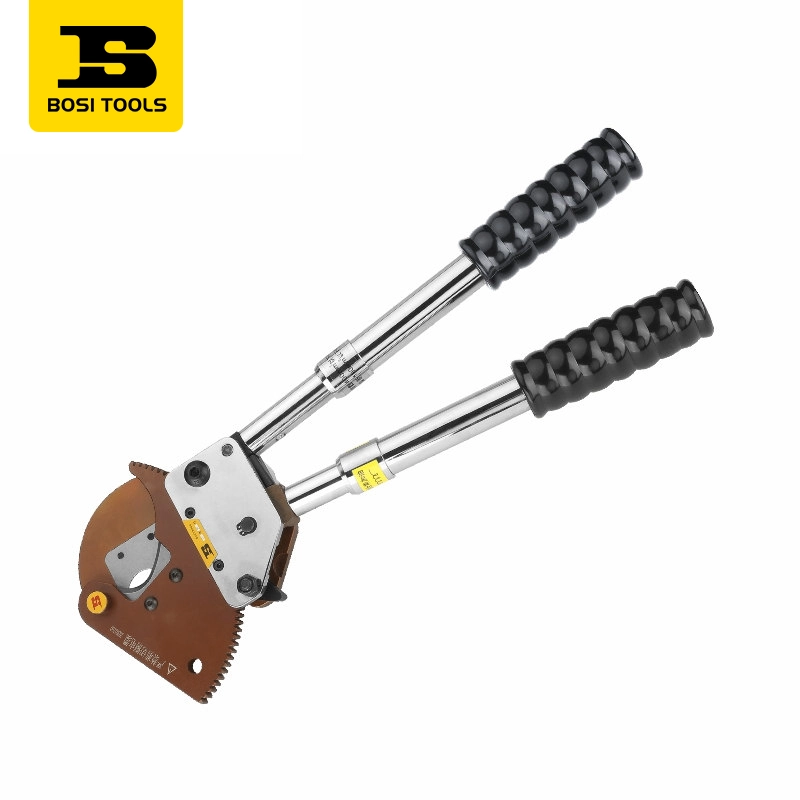
Table of Contents
- What Are Steel Stranded Cable Cutters?
- How Are Steel Stranded Cable Cutters Constructed?
- How Do They Cut Steel Stranded Cables?
- What Advantages Do They Provide?
- Where Are Steel Stranded Cable Cutters Used?
- What Should Buyers Consider Before Purchasing?
- How Do They Compare With Other Cable Cutting Tools?
- How Should Steel Stranded Cable Cutters Be Used?
- How Can Cutting Performance Be Maintained?
- What Should B2B Buyers Check With a Manufacturer?
- Frequently Asked Questions
- Final Considerations
What Are Steel Stranded Cable Cutters?
Steel stranded cable cutters are purpose-built cutting tools for severing cables made from multiple steel wires twisted into strands. Steel wire rope typically consists of individual wires, strands, and a central core. This multi-layer construction gives the cable flexibility and strength, but it also makes clean cutting considerably more difficult than cutting a single solid wire.
A suitable cutter must therefore do more than simply apply pressure. Its cutting head needs to engage the strands progressively while generating sufficient mechanical force to separate the steel wires without unnecessarily crushing the cable.
For professional applications, selecting a cutter according to the cable's construction, material, diameter, and rated cutting capacity is essential. A tool designed for copper or aluminum conductors should not automatically be assumed suitable for steel stranded cable. Dedicated steel stranded cable cutters are engineered for the greater resistance presented by steel strands. BOSI Tools, the product brand associated with Ningbo Shiji Bosi Tools Co., Ltd., describes its steel stranded cable cutter range as intended for steel strands and steel-cored aluminum strands, with telescopic handles designed to provide additional leverage.
How Are Steel Stranded Cable Cutters Constructed?
The effectiveness of a steel stranded cable cutter depends on several interacting components. Understanding these components helps buyers evaluate a tool beyond its appearance or handle size.
| Component | Function | Why It Matters |
|---|---|---|
| Cutting jaws | Engage and shear individual steel wires | Influence cut quality and blade durability |
| Pivot mechanism | Transfers handle force to the cutting head | Determines mechanical leverage and operating effort |
| Handles | Provide the operator with leverage | Longer handles can reduce required hand force |
| Telescopic mechanism | Allows handle length to be adjusted | Balances leverage and portability |
| Locking mechanism | Keeps the tool closed during storage | Protects cutting edges and improves handling safety |
Blade geometry is particularly important. Steel stranded cable consists of many individual wires, so a cutting head must accommodate the irregular circular profile of the cable while progressively separating the strands. Specialized wire-rope cutters commonly use blade geometries designed specifically for stranded steel rather than the straight cutting edges used for many general-purpose cutters.
How Do They Cut Steel Stranded Cables?
The cutting process combines mechanical leverage with a controlled shearing action. When the handles are brought together, the pivot converts the relatively large movement of the handles into concentrated force at the cutting jaws.
- Positioning: The cable is placed correctly between the cutting jaws.
- Initial engagement: The blades contact the outer wires of the strand.
- Progressive shearing: Continued handle movement transfers force through the cutting head and progressively severs the wires.
- Strand separation: The remaining inner wires are cut as the jaws close further.
- Completion: The cable separates with less deformation than would normally occur when an unsuitable general-purpose tool is used.
The actual result depends heavily on cable diameter, tensile strength, construction, blade condition, and whether the tool is being operated within its specified capacity. Using a cutter beyond its rated capacity can increase the force required and accelerate blade damage.
What Advantages Do They Provide?
For maintenance teams and professional installers, the main benefit is not simply the ability to cut steel cable. A properly matched cutter can make the cutting process more controlled, repeatable, and practical in field conditions.
- Reduced manual effort: Long handles increase leverage and can make high-resistance cutting more manageable.
- Better cut control: Dedicated cutting jaws are designed around stranded cable geometry.
- Reduced unnecessary deformation: Proper shearing can help limit excessive crushing and strand spreading.
- Field portability: Manual cutters do not require electrical power, hydraulic pumps, or compressed air.
- Flexible working positions: Telescopic handles can provide additional leverage when space permits and shorter dimensions when access is restricted.
- Lower equipment complexity: A mechanical hand tool can be easier to transport and maintain than powered cutting equipment.
For example, BOSI Tools lists telescopic steel stranded cable cutters with handle adjustment from 410 mm to 580 mm and states a cutting capacity of up to 100 mm² for steel strands and up to 400 mm² for steel-cored aluminum strands. Actual suitability should always be confirmed against the exact cable construction and manufacturer's specifications.
Where Are Steel Stranded Cable Cutters Used?
Steel stranded cables appear across numerous industrial and infrastructure environments. The appropriate cutter depends on the particular cable and work procedure.
| Application | Typical Cutting Requirement | Important Consideration |
|---|---|---|
| Power line work | Steel strands and steel-cored conductors | Confirm cable construction and rated capacity |
| Construction | Guy wires and structural cables | Control cable movement before cutting |
| Telecommunications | Support and messenger cables | Consider cable diameter and access space |
| Rigging and maintenance | Wire rope and stranded steel cable | Follow applicable inspection and replacement procedures |
| Industrial installation | Steel-reinforced cables | Match the cutter to the material rather than appearance alone |
Safety is especially important when working around load-bearing wire rope. OSHA notes that deterioration of wire rope can result in unexpected release of tension and potentially hazardous movement of a suspended load or controlled machine.
What Should Buyers Consider Before Purchasing?
Choosing a professional cutter should begin with the cable rather than the tool. The following factors can prevent mismatches and unnecessary operating problems.
1. Cable Diameter
Identify the largest diameter that the tool will need to cut. Never assume that a physically large cutter can safely handle every large cable. The manufacturer's rated capacity should be treated as a fundamental selection parameter.
2. Cable Material
Steel, stainless steel, galvanized steel, and steel-cored conductors can have different cutting characteristics. Confirm the cutter's intended material before placing an order.
3. Cable Construction
Wire rope construction varies according to strand arrangement, core type, and application. The same nominal diameter does not necessarily mean identical cutting resistance.
4. Handle Length
Longer handles can increase leverage, while shorter configurations may be easier to carry and operate in restricted spaces. Telescopic handles provide a practical compromise for users working across different environments.
5. Cutting Frequency
A tool used occasionally has different requirements from one used throughout every working day. High-frequency applications place greater demands on blade durability, pivot construction, ergonomics, and replacement-part availability.
6. Ergonomics
Handle grip, opening angle, total weight, and balance influence operator comfort. For repeated cutting, ergonomics can be as important as maximum capacity.
7. Replacement Parts
For professional buyers, ask whether replacement blades or other service components are available. A replaceable cutting component can extend the useful life of a tool when the main mechanism remains serviceable.
How Do They Compare With Other Cable Cutting Tools?
| Tool Type | Typical Material | Strength | Suitable for Steel Stranded Cable? |
|---|---|---|---|
| Steel stranded cable cutter | Steel stranded cable and wire rope | Dedicated shearing and leverage | Yes, when within rated capacity |
| Electrical cable cutter | Copper and aluminum conductors | Clean conductor cutting | Generally not intended for steel strands |
| Diagonal cutter | Small wires and general-purpose wire | Compact and versatile | Not normally appropriate for heavy steel cable |
| Bolt cutter | Bolts, rods, and hard wire | High leverage | Depends on cable design and manufacturer approval |
| Hydraulic cable cutter | Large cables and demanding applications | High cutting force with reduced manual effort | Suitable for applications within its specifications |
The key distinction is that steel stranded cable cutters are designed around the geometry and cutting resistance of stranded steel. A general-purpose tool may physically contact the cable but still produce poor results or suffer premature damage.
How Should Steel Stranded Cable Cutters Be Used?
Correct operation starts before the blades touch the cable. The cable should be identified, secured, and assessed according to the work procedure and applicable safety requirements.
- Confirm the cable type: Verify material, construction, diameter, and intended cutting location.
- Check the tool: Inspect the cutting edges, pivot, handles, and locking mechanism for damage.
- Secure the work area: Prevent unnecessary movement of the cable and keep other personnel away from the cutting zone.
- Control stored energy: Never cut a cable that remains under hazardous tension unless the specific procedure and equipment are designed for that operation.
- Position the cable: Place it correctly in the cutter according to the manufacturer's instructions.
- Apply steady force: Close the handles progressively instead of using uncontrolled impacts.
- Inspect the result: Check the cut end and the tool after cutting.
OSHA's construction regulations require wire rope inspections at specified intervals and identify conditions such as broken wires, significant corrosion, distortion, and diameter reduction as inspection concerns. These requirements apply to covered construction equipment and should be considered alongside the applicable local regulations and equipment manufacturer's instructions.
When a wire rope is being cut as part of maintenance or replacement, the cutting procedure should also account for strand stability. OSHA regulations concerning certain construction equipment include requirements related to securing wire rope strands during cutting, with procedures based on the wire-rope manufacturer's instructions.
How Can Cutting Performance Be Maintained?
Even a high-quality cutter requires routine care. Steel particles, moisture, contamination, and repeated high-load cutting can gradually affect the cutting edges and moving parts.
- Clean metal particles from the cutting head after use.
- Inspect blades for chips, cracks, deformation, or abnormal wear.
- Check the pivot for excessive looseness or binding.
- Keep telescopic sections clean and functioning smoothly.
- Lubricate moving components according to the manufacturer's instructions.
- Keep the tool dry when stored.
- Close and lock the handles when the tool is not being used, if a locking mechanism is provided.
- Do not grind or modify cutting edges unless the manufacturer specifically permits the procedure.
A cutter that suddenly requires significantly more force than normal should not simply be forced through the material. Increased resistance can indicate an unsuitable cable, an exceeded capacity, damaged blades, misalignment, or another mechanical issue.
What Should B2B Buyers Check With a Manufacturer?
For distributors, wholesalers, contractors, and industrial procurement teams, purchasing decisions should go beyond unit price. A detailed technical discussion with the manufacturer can reduce product mismatch and after-sales problems.
| Question to Ask | Why It Matters |
|---|---|
| What is the maximum cable diameter? | Confirms whether the tool matches the application. |
| What cable materials are supported? | Prevents use on unsuitable steel grades or cable types. |
| What is the blade material and treatment? | Provides information about wear resistance and cutting performance. |
| Is the handle length adjustable? | Helps users balance leverage and portability. |
| Are replacement components available? | Supports long-term product maintenance. |
| Can specifications be customized? | Useful for distributors and OEM purchasing programs. |
| What testing is performed? | Helps buyers evaluate consistency and product quality. |
| What packaging and private-label options are available? | Important for branded distribution and bulk orders. |
For international procurement, buyers should also confirm packaging requirements, documentation, production lead time, minimum order quantity, inspection procedures, spare-part availability, and after-sales support before placing a large order.
Frequently Asked Questions
Can steel stranded cable cutters cut ordinary electrical cable?
It depends on the manufacturer's specifications. Steel stranded cable cutters are primarily designed for steel strands and related high-strength stranded materials. Copper and aluminum electrical cables generally require cutters designed specifically for those conductors.
Why should I not use an ordinary wire cutter on steel stranded cable?
Ordinary wire cutters may not have the required blade geometry, hardness, leverage, or capacity. Using an unsuitable tool can produce poor cuts and accelerate cutting-edge damage.
Does a longer handle always mean better cutting performance?
Not necessarily. A longer handle can provide greater mechanical leverage, but it can also increase tool size and weight. The appropriate handle length depends on cable resistance, working environment, portability, and operator requirements.
How do I choose the correct cutting capacity?
Start with the largest cable diameter and material that the tool must cut. Then compare these specifications with the manufacturer's stated maximum capacity. Do not exceed the rated limit.
Are telescopic steel stranded cable cutters useful?
They can be useful when operators need both portability and additional leverage. The adjustable handle allows the tool to be shortened for storage or restricted spaces and extended when greater leverage is beneficial.
How often should the cutter be maintained?
Inspect the tool before use and clean it after cutting. The frequency of lubrication and more detailed inspection should follow the manufacturer's maintenance instructions and the intensity of use.
Can steel stranded cable cutters be customized for OEM orders?
Customization may be available depending on the manufacturer. Buyers should discuss handle configuration, packaging, branding, specifications, blade design, and order quantity during the initial technical review.
Final Considerations
Steel stranded cable cutters are specialized tools designed to solve a specific problem: cutting high-strength stranded steel materials with controlled mechanical force. The correct tool should be selected according to cable material, diameter, construction, cutting frequency, working environment, and required ergonomics rather than appearance alone.
For professional users, good cutting performance is only one part of the equation. Blade durability, handle leverage, tool balance, maintenance requirements, replacement components, manufacturing consistency, and supplier support all influence the practical value of a cutter over its service life.
Ningbo Shiji Bosi Tools Co., Ltd. offers manual cutting tools including steel stranded cable cutters as part of its broader professional hand-tool range. Its published product information includes telescopic-handle models intended for steel strands and steel-cored aluminum strands. Buyers should confirm the exact model capacity and application compatibility with the manufacturer before ordering.
If you are sourcing steel stranded cable cutters for professional use, wholesale distribution, OEM projects, or industrial tool programs, contact us to discuss cable specifications, cutting capacity, handle configuration, packaging requirements, and customized purchasing solutions.
Choose the cutter according to the cable, the working conditions, and the required cutting performance—and verify the manufacturer's specifications before use.